
November 3 LADWP Solar & Battery Workshop: Grid Approval, NEM and Backup Power Explained
November 3, 2026, 9–10:30 AM, Microsoft Teams: LADWP explains solar, battery storage and co-generation interconnection. Read the homeowner checklist and confirm registration with LADWP.
Event details — Tuesday, November 3, 2026
Time: 9:00–10:30 AM Pacific. Format: live Microsoft Teams webinar hosted by LADWP's Interconnections Group. Intended for green-energy and building professionals as well as interested customers. Check the official LADWP event listing for registration instructions and changes.
Official event details and registration: https://www.ladwp.com/events/2026-11-03/nem-bess-co-generation-customer-workshop-november-2026. Continue learning for free: app.homesolarsimplified.org | homesolarsimplified.org. Independent educational publication; not affiliated with or endorsed by LADWP.
Start with the utility account, not the sales estimate
Check the utility name and rate schedule on your actual electricity bill. LADWP is a municipal utility, and homeowners should not assume that Southern California Edison's Solar Billing Plan applies to their LADWP account.
Gather twelve months of usage if available, including seasonal changes, and ask any installer to document the assumptions behind estimated production, self-consumption, exports and purchased electricity.
Understand the approval sequence
Ask the installer who is responsible for the interconnection application, electrical permits, inspections, any required equipment changes and LADWP authorization to operate. A building inspection alone is not proof of utility permission to operate.
If a battery is proposed, ask whether it will export to the grid, whether it can charge from the grid, and what control settings and utility approvals are required for the proposed configuration.
Battery storage and outage backup are different decisions
Battery capacity in kilowatt-hours indicates stored energy; output in kilowatts determines which appliances can operate simultaneously. Request a written list of protected circuits and estimated runtime under realistic loads.
Not every solar or battery installation supplies electricity during an outage. Verify the isolation equipment, backup configuration and whether the system can recharge from solar while the grid is down.
Questions to take to an LADWP workshop
Which tariff applies to a new residential solar customer at my address? How are exports credited? Which applications and inspections are required for solar-plus-storage? Are there program restrictions or equipment settings for batteries? Where can homeowners verify current incentive eligibility?
For workshops and schedule updates, consult LADWP's official events calendar. Event participation is educational and does not constitute an endorsement of this independent website.
Illustrated explanation
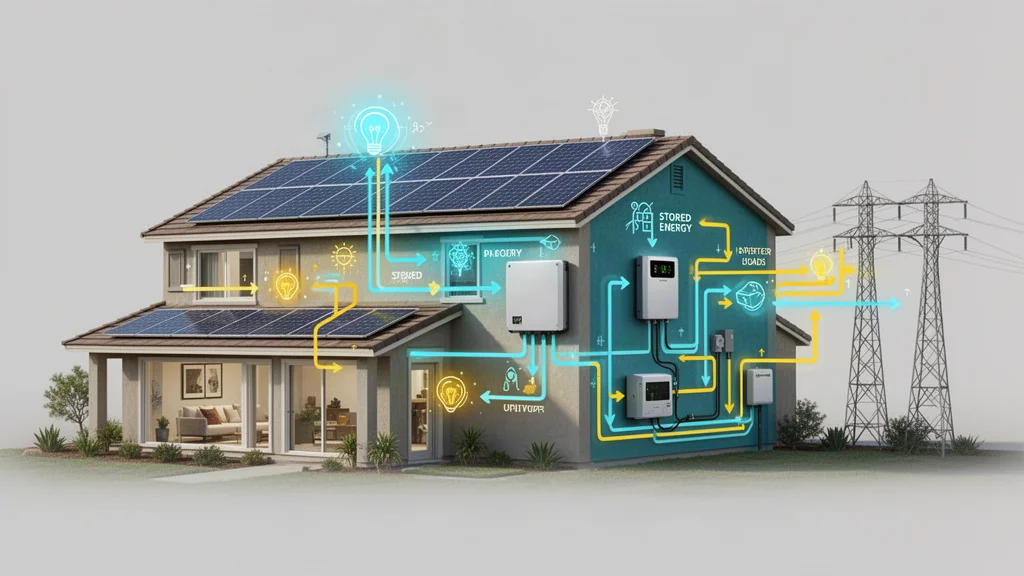
How to plan home battery storage
- List essential loads. Write down the appliances and circuits needed during an outage, including their running watts and any starting surge.
- Compare power and energy. Check continuous output in kW separately from usable stored energy in kWh. Estimate runtime using realistic consumption and conversion losses.
- Verify the operating mode. Ask whether the system can isolate from the grid, recharge from solar during an outage, and comply with the applicable utility interconnection requirements.
For further independent technical context: California Energy Commission — Energy Resources. This is an educational reference, not an installer recommendation.
Frequently asked questions
Does solar automatically keep the lights on during an outage?
No. Backup requires a system specifically designed and approved for islanded operation.
Does an LADWP customer follow SCE's solar billing rules?
Not necessarily. Confirm the current LADWP tariff applicable to the account.
Questions worth asking
- Which LADWP rate applies?
- Who obtains permission to operate?
- Will my battery supply backup power?
Related guides
Understand battery capacity, output and backup runtimeSolar permits, inspections and permission to operateSolar planning in Los Angeles County
Electric utility rules, roof conditions and household electricity use vary by address. Explore regional guidance before relying on a statewide solar savings estimate.
Los Angeles County solar education San Fernando Valley: LADWP, panels and batteries Northridge solar planning Van Nuys solar quotes and utility questions Pacoima solar financing and contract checklist Sylmar roof and battery backup planningStill researching solar?
Search homeowner guides by topic, electric utility, or location.
Sources and further reading
Updated: October 2026. Confirm changing details with the official sources.
These links identify documents and resources used for this guide. Listing a source does not mean it was independently checked today. Utility rates, incentives, product specifications and program availability may change; confirm the latest version and effective date with the source.
LADWP — official November 3 NEM, BESS and Co-Generation workshopLADWP — solar programsLADWP — quarterly interconnection webinarsUS DOE — Homeowner's Guide to Going SolarStart with a home energy checkup
Organize your usage, home details and goals before comparing proposals.
Try the home energy checkupReady to compare companies?
Explore provider options when you are ready to request quotes.
Explore provider options