What Size Solar Battery Do I Need?
Size a battery around the loads you care about, not a generic whole-home number.
Published by Home Solar Simplified · Editorial standards
https://homesolarsimplified.org/solar-guides/solar-battery-size
Published by Home Solar Simplified. Includes 4 linked sources. Documented editorial date: .
A citation or editorial date does not guarantee a tariff, incentive or program remains unchanged today.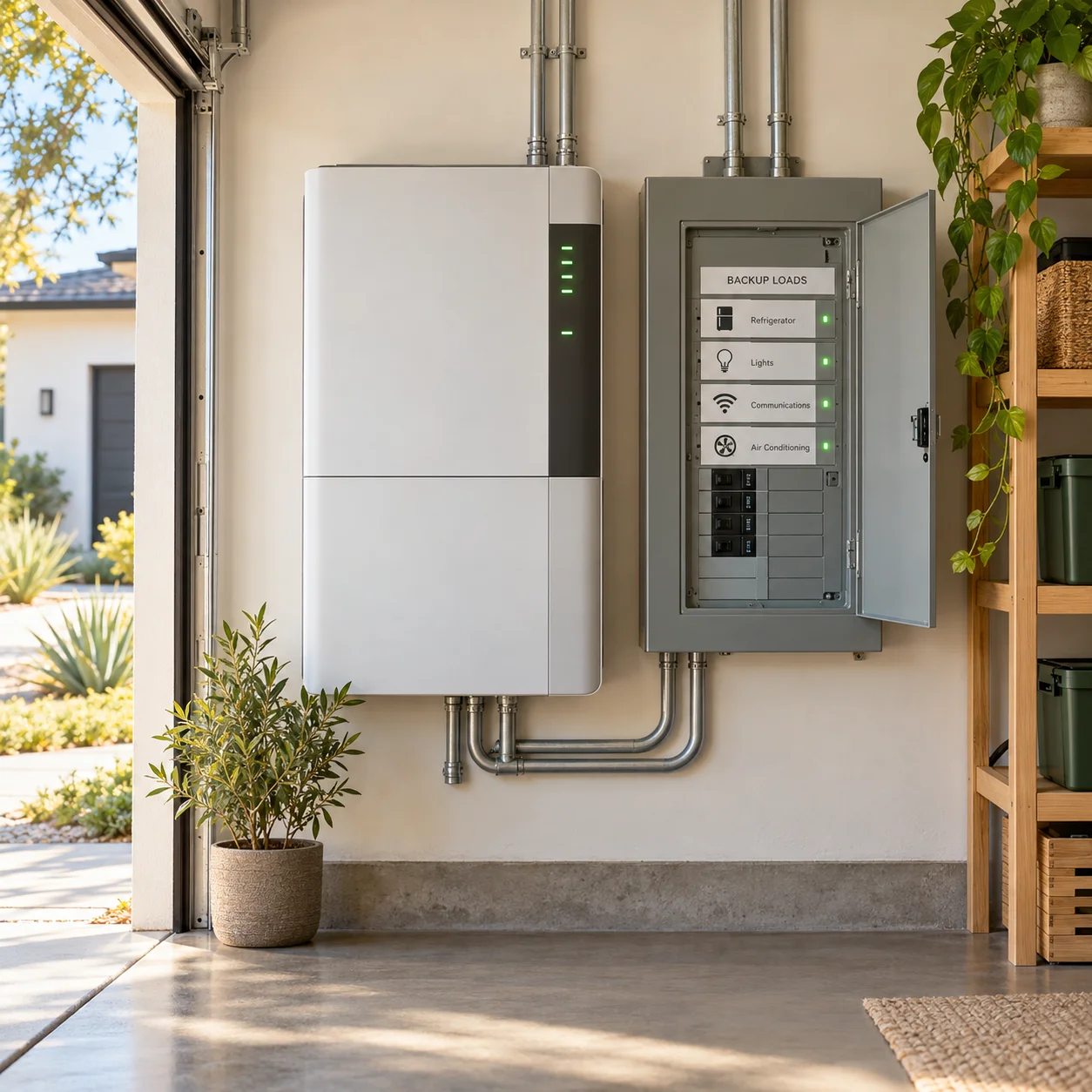
Quick answer: size a home battery from loads, hours and power
There is no universal home-battery size. Start with the appliances and circuits that must operate during an outage, estimate each load's average watts and operating hours, and add the delivered energy in kilowatt-hours. Then account for inverter losses, reserve settings, appliance cycling and the battery's usable—not merely nameplate—capacity.
Energy capacity and power solve different problems. Usable kWh affects runtime; continuous and surge kW determine which equipment can run or start at the same time. A 300 W average load for 10 hours is 3 kWh before losses and reserve, but that arithmetic does not prove that a particular battery can start a motor, run air conditioning or cover an entire home.
The final proposal should name the backed-up circuits, expected runtime under stated loads, usable kWh, continuous and surge kW, reserve assumption, transfer equipment and whether solar can recharge the battery while the grid is down. DOE explains that outage operation requires properly configured inverter and storage equipment; solar panels alone generally shut off with the grid.
Begin with the appliances you need during an outage
Battery sizing starts with the circuits that must remain powered and how long you need them. Refrigeration, communications, lighting and large heating or cooling equipment have very different energy demands.
List each load's approximate wattage and hours of operation. Ask an installer to validate the assumptions with actual equipment data.
Distinguish stored energy from instantaneous power
Battery usable capacity is measured in kWh; continuous and surge output are measured in kW. A battery with enough energy may still lack the output to start a large motor or run several appliances at once.
For illustration, a steady 300-watt load for ten hours requires about 3 kWh delivered, before inverter losses and reserve settings. Actual appliance cycling can change the result.
Check the backup configuration
A whole-home marketing label does not prove that every circuit can operate simultaneously. The proposal should identify the transfer equipment, backup panel, load controls and any excluded circuits.
Ask whether solar can recharge storage during an outage, whether the system works overnight and what happens after several cloudy days.
Savings sizing is different from backup sizing
A battery used to shift midday solar generation into evening hours should be evaluated against hourly electricity use, the applicable utility tariff and round-trip efficiency.
Compare the expected bill effect and added installed cost separately from the value of backup power.
Get a load-by-load design before signing
Request usable kWh, continuous and surge kW, backed-up circuit list, reserve assumptions, expected runtime under named loads and model-specific warranty conditions.
Ask what changes if future loads are added and whether the battery can be expanded without replacing other equipment.
Build an energy worksheet using operating hours rather than appliance count
Make one line for every protected load and record the average power during its expected operating period. In a fictional overnight plan, communications equipment averages 40 W for ten hours, selected lighting uses 60 W for four hours, and refrigeration averages 100 W over ten hours. Those assumptions yield 400 Wh, 240 Wh and 1,000 Wh respectively, totaling 1,640 Wh or 1.64 kWh delivered to the loads. The figures are invented for instruction; measure or validate your own equipment before sizing.
Add loads that are intermittent with their actual expected duration. In the same fictional plan, a 1,000 W appliance used for fifteen minutes adds 250 Wh or 0.25 kWh, bringing the total to 1.89 kWh. Do not count a short-duration appliance as running all night, and do not forget it in the simultaneous-power review simply because its energy contribution is small. The worksheet separates those two questions.
Have the installer review the estimates against household records, equipment information and any available measurements. Refrigerators, pumps and cooling equipment cycle, so one instantaneous reading may not represent a full evening. Mark uncertain inputs and test a higher-use case. A precise-looking total is only as trustworthy as the operating assumptions that produced it.
Translate delivered energy into the quoted battery's capacity basis
The load worksheet estimates electricity reaching appliances. The proposal may describe nominal stored energy, usable energy at the battery or usable energy measured on another basis. Ask the designer to reconcile those terms before applying reserve and efficiency assumptions. If a manufacturer value already accounts for an operating limit, subtracting that limit again would understate available energy.
For a separate fictional calculation, suppose the required delivered energy is 6 kWh, the assumed conversion efficiency is 90 percent and 80 percent of the starting energy is available under the chosen reserve. Dividing 6 by 0.9 and then by 0.8 gives about 8.33 kWh on that example's starting-energy basis. These are teaching assumptions, not recommended reserve settings or specifications for any product. Round only when mapping the target to an actual supported configuration.
Ask for a second calculation with the charge level expected when an unplanned outage begins. A battery that spends the evening shifting household usage may not start an outage full. If a proposal assumes a full battery every time, the homeowner should know which settings or operating restrictions support that assumption and what capability remains when it is not met.
Check two nights without counting the same solar energy twice
An overnight target does not describe a multi-day outage. In an invented two-night case, begin with 8 kWh available to selected loads, consume 4 kWh on the first night and retain 4 kWh. Suppose the following day's solar production, after serving direct daytime demand and accounting for charging losses, adds 2 kWh available for the next night. The second night starts with 6 kWh, not a full battery and not the entire day's solar production.
If the second night also uses 4 kWh, 2 kWh remains. If clouds reduce replenishment to zero, only the original 4 kWh remains at the start of that second night. The exercise shows why the day-by-day balance needs separate entries for direct household use and energy actually stored. Do not count one solar kilowatt-hour as both daytime consumption and battery replenishment.
Ask whether the proposed solar-plus-storage configuration can maintain islanded operation and restart after low-energy shutdown under the manufacturer's conditions. Those behaviors are equipment-specific. The arithmetic alone cannot establish them. Request a low-solar plan and a household action threshold so occupants know when optional loads must be reduced or another safe option becomes necessary.
Separate a present need from a possible future expansion
Create one worksheet for today's confirmed loads and another for changes you genuinely plan. A future electric vehicle or heat pump can alter demand substantially, but its outage use may remain optional. Ask whether supporting that future load requires more energy, additional inverter power, different controls or a service change. Buying energy capacity alone may not solve the future constraint.
Request a written explanation of the expansion path and what must be installed now to preserve it. Compare the added present cost with a future quotation that identifies required labor, approval and compatibility limits. Leave uncertain future purchases out of the base savings case. A useful battery size meets an explicit present operating goal and provides a clearly priced option for growth, rather than turning every hypothetical appliance into equipment you must buy today.
Illustrated explanation
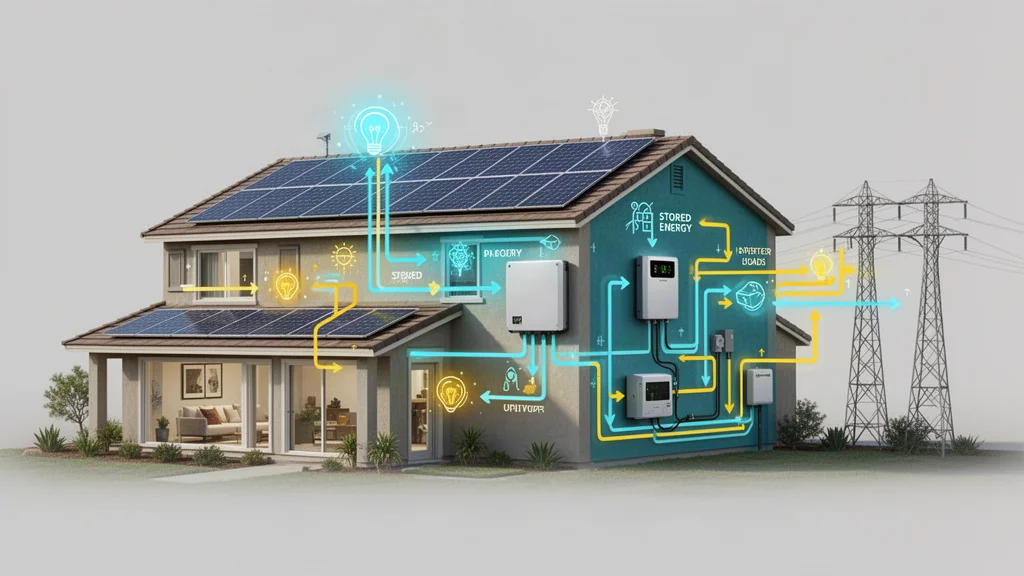
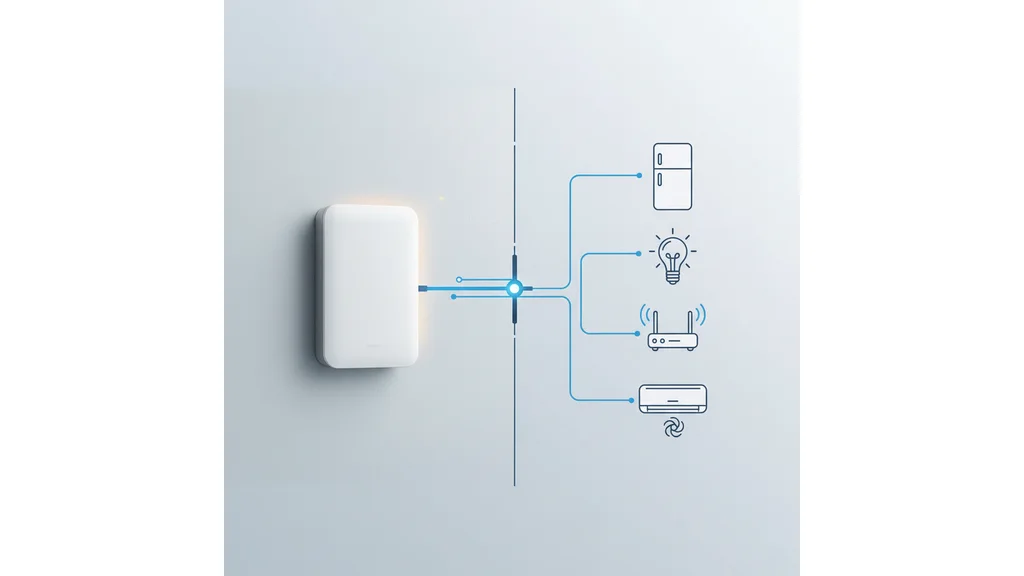
How to plan home battery storage
- List essential loads. Write down the appliances and circuits needed during an outage, including their running watts and any starting surge.
- Compare power and energy. Check continuous output in kW separately from usable stored energy in kWh. Estimate runtime using realistic consumption and conversion losses.
- Verify the operating mode. Ask whether the system can isolate from the grid, recharge from solar during an outage, and comply with the applicable utility interconnection requirements.
For further independent technical context: California Energy Commission — Energy Resources. This is an educational reference, not an installer recommendation.
Frequently asked questions
How do I estimate battery capacity for essential loads?
Multiply each load's average power in kilowatts by the hours it must run, add the results, then allow for inverter losses, reserve settings and appliance cycling. Confirm the final design with actual equipment data and the battery's usable capacity.
Is a 10 kWh battery enough for a whole home?
Not necessarily. Runtime depends on usable energy, reserve settings and the loads operating, while continuous and surge power limit what can run at once. Large air conditioners, electric heating, cooking and EV charging can exceed an essentials-only design.
Can solar recharge a battery during a grid outage?
Only if the solar, inverter, battery and transfer equipment are designed and configured for islanded operation. Ask the installer to document outage-recharging behavior and any load or weather limits for the quoted system.
Questions worth asking
- What usable capacity and continuous and surge output are included?
- Which circuits can run during an outage, and for how long under which loads?
- Can the battery recharge from solar during an extended outage?
- What equipment, panel work, and controls are required for backup?
- What warranty limits, service response, and replacement terms apply?
- How do I calculate the battery energy needed for essential loads?
- Is a 10 kWh battery enough for a whole home?
- Can solar recharge a home battery during a power outage?
Related guides
Decide whether battery storage fits your goalsUnderstand what whole-home backup requiresCompare solar-only and solar-plus-battery costsPlan solar and storage for seasonal conditionsReview battery installation, permits and commissioningMore specialized guides
Generac PWRcell 2 equipment explainedLG Home 8 equipment explainedBattery service life and warranty questionsSolar planning in Los Angeles County
Electric utility rules, roof conditions and household electricity use vary by address. Explore regional guidance before relying on a statewide solar savings estimate.
Los Angeles County solar education San Fernando Valley: LADWP, panels and batteries Northridge solar planning Van Nuys solar quotes and utility questions Sylmar roof and battery backup planningStill researching solar?
Search homeowner guides by topic, electric utility, or location.
Sources and further reading
Updated: October 2026. Confirm changing details with the official sources.
These links identify documents and resources used for this guide. Listing a source does not mean it was independently checked today. Utility rates, incentives, product specifications and program availability may change; confirm the latest version and effective date with the source.
U.S. Department of Energy — Homeowner's Guide to Going SolarU.S. Department of Energy — Solar and Resilience BasicsCalifornia Air Resources Board — Zero-Emissions Residential Backup Power ToolCalifornia Public Utilities Commission — Net Energy Metering and Net BillingStart with a home energy checkup
Organize your usage, home details and goals before comparing proposals.
Try the home energy checkupReady to compare companies?
Explore provider options when you are ready to request quotes.
Explore provider options