
How Much Does Solar + Battery Cost in Southern California?
A solar-and-battery quote may leave out roof repairs, backup wiring or electrical upgrades. Learn which line items make Southern California projects cost more.
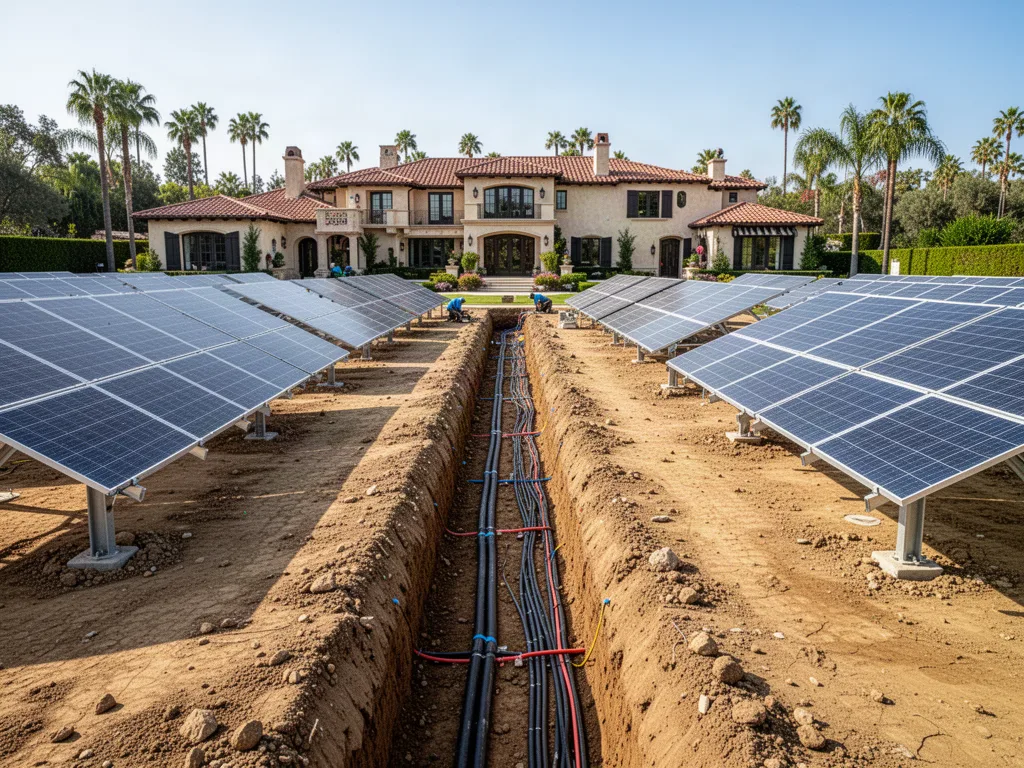
Adding a battery to a solar quote changes more than the equipment price. Backup wiring, the electrical panel, the battery's usable capacity and the home's energy needs can all change the installed cost.
Ask for separate itemized prices for the solar array, battery, backup equipment and electrical work. Compare solar capacity in kW, annual production in kWh, battery storage in kWh and battery output in kW. A lower monthly payment does not establish that the combined system is a better value.
Why there is no reliable one-number price
A solar-plus-battery project is designed around a particular home, utility account and backup goal. A useful estimate needs the system size, expected production, battery capacity and output, electrical design, roof work, permits, equipment and payment terms. Online averages can help frame a conversation, but they cannot replace a written, site-specific scope.
Ask for separate, like-for-like cash quotes for solar only and solar with storage, with any shared inverter or electrical work clearly allocated. This reveals the incremental storage cost and whether the battery is intended for evening energy shifting, outage backup, or both. Do not assume a battery is essential for every solar project.
For a reference point, the U.S. Department of Energy's 2025 Q1 residential benchmark models an 8 kW solar system with a 13.5 kWh battery at $4.59 per watt, or about $36,720 before incentives, in 2024 U.S. dollars. This is a national modeled benchmark—not a Southern California quote or a prediction for your home. Roof condition, electrical work, project design, installer pricing and financing can move an actual proposal substantially.
What changes the solar portion
Solar pricing can change with system capacity, roof area and shape, shade, panel and inverter selection, wiring distance, service-panel limits, permitting and any roof repair or replacement. The production estimate also depends on roof orientation, shading, weather assumptions and system losses.
Compare the same scope across proposals. Request the system size in kW DC, first-year production in kWh, equipment models, roof layout, cash price and every excluded cost. Panel count alone is not a fair way to compare two systems.
What changes the battery portion
Battery cost depends on usable energy capacity in kWh, continuous and surge output in kW, number of units, inverter compatibility, backup gateway or subpanel, load controls, electrical upgrades and installation labor. A battery that backs up selected essential circuits can require a different design from one intended to support large loads such as air conditioning.
Ask the installer to list the backed-up circuits, expected runtime at stated watt loads, continuous and surge output, whether solar can recharge during a grid outage, and the transfer equipment required. Confirm which appliances cannot run simultaneously. A product name or a claim of whole-home backup does not specify how much power the system can deliver.
Your utility changes the battery value—not the equipment price alone
Start with the utility name and tariff on your own bill. For an SCE customer on the Solar Billing Plan, export credits vary with when electricity reaches the grid; SCE says exports during higher-demand hours can earn more than midday or winter exports. Ask for an hourly import, export and battery-dispatch model instead of accepting one blended credit rate.
LADWP customers should use current LADWP solar, storage, rate and interconnection information—not an SCE Solar Billing Plan assumption. LADWP currently lists a Self-Generation Incentive Program for qualified residential customers, but eligibility and funding must be confirmed directly. In either territory, price backup resilience separately from projected bill savings because an outage goal can justify equipment that a bill-only model would not.
Compare the complete installed amount
Have each proposal separate equipment, installation, design and permit work, electrical or roof work, battery backup equipment, monitoring, financing fees and any optional service plan. Ask which amount is the cash price, which is financed, the APR, term, fees and total scheduled payments. A lower monthly amount can reflect a longer term or a different financed price.
Do not subtract a rebate, tax item or utility credit until its current eligibility, amount, timing and approval requirements are confirmed with the official administrator. The IRS says the homeowner Residential Clean Energy Credit is unavailable for property placed in service after December 31, 2025, so a 2026 proposal should not present the former 30% credit as an available homeowner discount. Keep utility-bill assumptions separate from project price: solar and storage do not guarantee a zero bill.
A practical comparison worksheet
For each quote, record: solar size and production; battery usable kWh and output kW; backup loads and runtime assumptions; cash price; financed total; remaining utility-bill estimate; roof and panel work; warranties; and who handles service. Mark every unknown instead of treating it as included.
Use the home energy checkup to organize your current usage and goals. If you want proposals after that, compare provider options using the same written scope.
Separate the battery budget from the solar budget
Ask the same installer for two written scopes: solar alone and the identical solar design with storage. Subtracting the two totals shows that proposal’s added storage cost, including any controls or electrical work. It is more informative than comparing a battery’s retail price with a complete installation.
Use the worksheet below to record both proposals. Write 'excluded' or 'unpriced' where appropriate. A blank amount should never silently become zero. Compare backup circuits and power limits as well as stored energy before deciding whether the extra cost buys the capability you want.
Test the added storage price against a defined household budget
Start with two alternatives from the same quote: the complete solar-only project and the same project with the storage capability you actually want. In a fictional comparison, solar alone is $24,000 and solar with selected-circuit backup is $37,000. The incremental storage project is $13,000. That difference is meaningful only if both scopes use the same roof work, solar equipment, taxes and construction assumptions. If the larger proposal also upgrades the solar array, ask the installer to separate that change before attributing the whole difference to storage.
Next separate any forecast bill effect from the price of resilience. Suppose an invented analysis estimates $450 in annual net utility-bill reduction from storage, after its stated losses and operating assumptions. Over ten years, holding that figure constant would total $4,500 before considering discounting, maintenance or future changes. It would not by itself recover a $13,000 incremental price. This is a teaching comparison, not a forecast or a claim that batteries cannot make financial sense. It shows why a homeowner should identify how much of the purchase is justified by a backup goal rather than present the entire price as guaranteed utility savings.
Test affordability without unapproved incentives or optimistic export revenue. Ask what cash must be available at signing, during construction and after inspection, and what amount remains exposed if an application is denied. If financing is proposed, compare the incremental amount financed and total payments with the incremental cash price. A battery can remain the preferred choice when the household knowingly values resilience, but that decision should fit its actual budget rather than depend on money that has not been approved or earned.
Price an excluded item before it becomes a change order
Pick the largest uncertain item in each bid and request a defined allowance or a separate quotation. If the battery location requires a long wiring run, ask how much distance the base price covers and what changes beyond it. For a backup panel, ask how many circuits and what finish repairs are included. Compare the resulting totals rather than comparing a complete proposal with an attractive base price that omits required work.
Record what happens if the site assessment changes that item. A written review point before ordering or construction lets you decide whether the revised capability is worth the revised cost. It is more useful than accepting an open-ended promise that small electrical details will be settled later.
| Record separately | Proposal A | Proposal B |
|---|---|---|
| Solar capacity and annual output | Enter written details | Enter written details |
| Solar-only cash price | Enter written details | Enter written details |
| Added storage installed price | Enter written details | Enter written details |
| Usable battery kWh / continuous kW | Enter written details | Enter written details |
| Backup circuits and controls | Enter written details | Enter written details |
| Roof and electrical work | Enter written details | Enter written details |
| Unpriced exclusions | Enter written details | Enter written details |
| Financed total and remaining utility bill | Enter written details | Enter written details |
Frequently asked questions
How much does solar plus a battery cost?
The installed price depends on system size, roof and electrical work, battery capacity and output, backup equipment, permits, location and payment terms. Compare itemized written proposals rather than relying on one generic price.
What makes a solar battery quote more expensive?
More storage capacity, higher power output, multiple batteries, backup controls, a subpanel, electrical upgrades, difficult wiring or site work can increase the installed total. Ask for each item to be priced separately.
Should I compare monthly payments?
Compare the cash price, amount financed, APR, fees, term and total scheduled payments alongside the monthly amount. A smaller payment can come from a longer term or different financed price.
Questions worth asking
- What is the separate cash price for solar and for the battery?
- Which roof, electrical, permit or backup-panel costs are included?
- How much usable battery energy and continuous output are included?
- Which circuits can run, for how long, under which load assumptions?
- What utility, export-credit and remaining-bill assumptions are used?
- What is the financed total after fees, and what can change the payment?
Related guides
Determine whether battery storage is necessaryEstimate seasonal production and storage needsCompare California solar installation pricesSolar planning in Los Angeles County
Electric utility rules, roof conditions and household electricity use vary by address. Explore regional guidance before relying on a statewide solar savings estimate.
Los Angeles County solar education San Fernando Valley: LADWP, panels and batteries Northridge solar planning Van Nuys solar quotes and utility questions Pacoima solar financing and contract checklist Sylmar roof and battery backup planningStill researching solar?
Search homeowner guides by topic, electric utility, or location.
Sources and further reading
Sources reviewed: October 20, 2026. Confirm changing details with the official sources.
These links identify documents and resources used for this guide. Listing a source does not mean it was independently checked today. Utility rates, incentives, product specifications and program availability may change; confirm the latest version and effective date with the source.
U.S. Department of Energy — 2025 Q1 Solar Photovoltaic System Cost BenchmarksU.S. Department of Energy — Homeowner’s Guide to Going SolarU.S. Department of Energy — Solar Soft Costs BasicsCalifornia Public Utilities Commission — Solar Consumer Protection GuideSouthern California Edison — How Solar Billing Plans WorkLos Angeles Department of Water and Power — Solar ProgramsInternal Revenue Service — Residential Clean Energy CreditConsumer Financial Protection Bureau — Solar Financing Issue SpotlightStart with a home energy checkup
Organize your usage, home details and goals before comparing proposals.
Try the home energy checkupReady to compare companies?
Explore provider options when you are ready to request quotes.
Explore provider options