Do I Need a Battery, and What Could It Power?
Choose the circuits you want to protect, then compare usable energy, power output and outage operation.
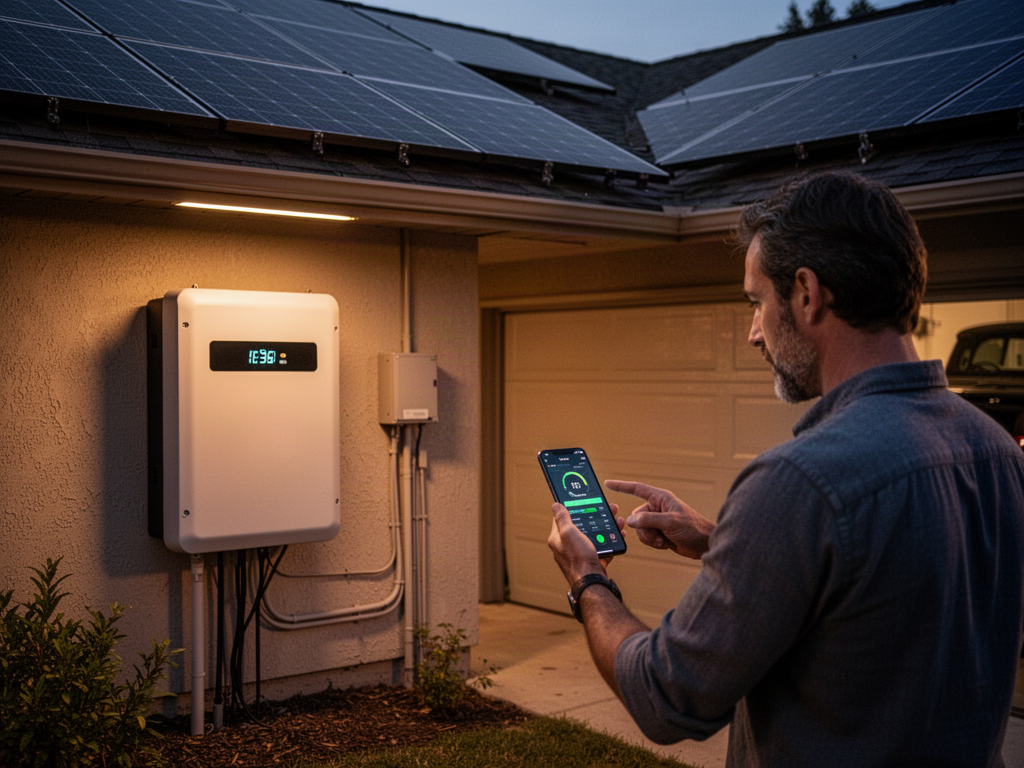
Choose the job before choosing the battery
Start with your purpose: backup during outages, shifting solar energy into the evening, or both. A battery can store electricity for later use, but it adds cost and operating decisions. Ask for solar-only and solar-plus-storage proposals so the battery’s price and benefits remain visible.
Solar panels alone usually do not provide outage power
Standard grid-connected solar generally shuts down when grid power fails. Outage operation requires equipment designed and configured for backup, including suitable inverter and isolation arrangements. Do not assume every installed battery powers the home during a blackout. Ask the installer to describe exactly how the quoted system behaves when the grid goes down.
Pick essential loads
List the refrigerator, lights, router, phone charging and other loads you want to support. Ask which circuits will be connected to backup. Central air conditioning, electric cooking, vehicle charging and other large loads may require a different design. For medical equipment, obtain its actual requirements and a separate dependable backup plan rather than relying on this rough estimate.
Energy capacity and power output answer different questions
Usable kWh tells you how much energy is available. Continuous kW and surge capability tell you what loads the system can operate at once and start successfully. A large energy capacity alone does not guarantee it can start a particular motor or power every appliance simultaneously.
A fictional runtime calculation
Suppose 8 kWh is actually available for the backed-up loads after the chosen reserve and operating limits. If those loads average 0.4 kW, division gives about 20 hours. At 2 kW, it gives about 4 hours. This simplified calculation is not a warranty: real loads cycle, power limits matter, losses affect usable energy, and solar recharging depends on weather and system design.
Ask about the everyday tradeoff
Ask how much energy is reserved for an outage and how much is used for daily bill management. Request the battery warranty, installation scope and replacement assumptions. A larger backup reserve can leave less energy for everyday use; ask for the operating plan that matches your priority.
Your next step in the app
Use Scan an appliance to build an initial load list and review the wattage suggestions. Ask the installer to verify those loads and provide a circuit-by-circuit backup plan. The app’s estimates are planning aids, not electrical design or guaranteed runtime.
Questions worth asking
- Does this exact configuration operate during an outage?
- Which circuits are backed up?
- What are usable kWh, continuous kW and starting limits?
- How much reserve will be kept for outages?
Sources and further reading
DOE: Solar and Resilience BasicsDOE: Homeowner’s Guide to SolarExplore more for your home
Home Solar Simplified
Explore solar education, battery planning and home energy tools to prepare for your next decision.
Explore Home Solar SimplifiedConnectPoint ISP
Visit ConnectPoint ISP to explore home internet options and ask about service availability at your address.
Visit ConnectPoint ISP