Hiring a Solar Contractor in Fairbanks Ranch: Who Will Actually Install and Service It?
Questions Fairbanks Ranch homeowners can use to identify the contractor, installation crew, warranty responsibility and long-term service path.
Program information checked October 5, 2026. Confirm current availability with the administrator.
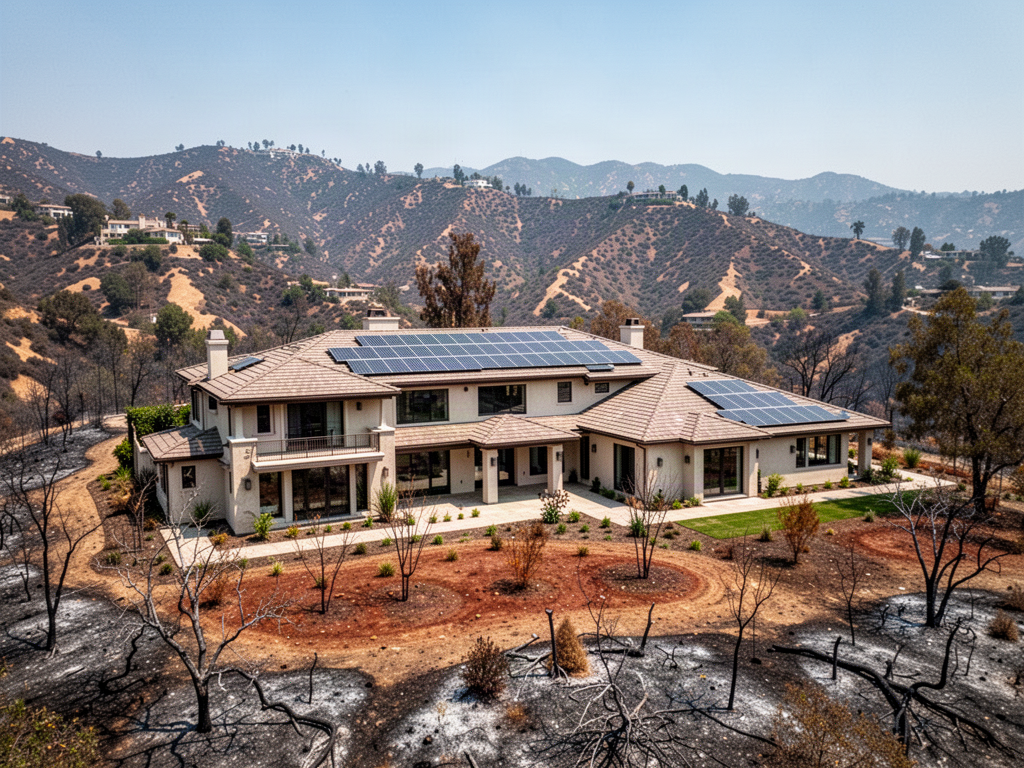
There is no universal 'best' solar company
Fairbanks Ranch homes can involve estate properties, pools, large loads and backup-power goals. That mix can materially affect array layout, construction scope, storage design, equipment placement and price.
The best fit depends on the property's roof, electrical system, desired equipment, construction complexity and service expectations. Start with multiple site-specific proposals rather than a national ranking alone.
Find out who actually owns the work
Ask for the legal contracting entity, license information, whether installation is subcontracted and who is responsible for workmanship warranty claims. A polished sales presentation is not a substitute for knowing who will be on the roof and who will return if something fails.
Ask for recent local projects with similar roof or electrical conditions and, when practical, talk with homeowners about post-install service rather than only the sales experience.
Normalize every bid before comparing
Require the cash price, kW DC, year-one kWh estimate, exact equipment, battery specifications, roof/electrical scope, warranties and exclusions from every bidder.
Then compare financing separately. This prevents a small payment from making a more expensive or longer-term offer look cheaper than it is.
Look for service capacity, not just warranty duration
Ask who answers service calls, whether monitoring alerts are actively reviewed, what labor is covered and what happens if a manufacturer approves a component replacement.
A long manufacturer warranty can still leave the homeowner coordinating labor, roof access or troubleshooting if the installer has a weak service operation.
Slow down when the sales process speeds up
Be cautious with same-day-signature pressure, vague claims that a program is about to disappear, missing model numbers or refusal to provide a cash price.
California homeowners should compare the contract against current CPUC consumer-protection guidance and keep copies of every signed document.
What a media-quality homeowner review should include
For a higher-value Fairbanks Ranch property, the useful question is not whether solar is popular; it is whether the proposed system fits the house, the ownership horizon and the household's real electricity pattern. Review the proposal as a construction and energy project, not as a retail appliance purchase.
Ask the contractor to distinguish measured facts from forecasts. Roof dimensions, equipment model numbers and contract price are facts. Future utility inflation, long-term production and projected lifetime savings are assumptions. A strong article or proposal makes that distinction obvious.
When comparing systems, look at whole-project quality: roof workmanship, equipment compatibility, electrical design, permitting responsibility, utility interconnection, monitoring, service response and how the system will be handled if the home is sold or reroofed later.
For larger homes, check whether the proposal has modeled major loads individually. Multiple HVAC systems, pools, spas, EV charging, guest houses, gates and landscape equipment can change both solar sizing and backup strategy. A system sized from a single recent bill can miss those patterns.
Document aesthetic requirements before final design approval. Premium homes often involve roof visibility, array symmetry, conduit routing, equipment screening and HOA or architectural-review concerns. Those expectations should be written into the design conversation, not raised after installation begins.
Finally, stress-test the economics. Compare the contractor's primary savings case with a lower-production case and a case with different future utility assumptions. If the project still makes sense under a more conservative scenario, the decision is less dependent on optimistic forecasting.
Questions worth asking
- Who is the legal contractor and who performs installation?
- Can I see a cash price and exact equipment list?
- Who handles service after installation?
- What happens if the company or salesperson changes?
Related guides
How to compare two solar quotesIs solar worth it for my home?Compare solar financing optionsSources and further reading
U.S. Department of Energy — Homeowner's Guide to Going SolarCalifornia Public Utilities Commission — Solar Consumer Protection GuideExplore more for your home
Home Solar Simplified
Explore solar education, battery planning and home energy tools to prepare for your next decision.
Explore Home Solar SimplifiedConnectPoint ISP
Visit ConnectPoint ISP to explore home internet options and ask about service availability at your address.
Visit ConnectPoint ISP