Your Solar Company Went Bankrupt. Do You Still Have to Pay?
As of October 23, 2026, a solar installer's closure does not automatically cancel a separate loan, lease or PPA. Identify every responsible company, document project status and use the agreement's dispute process before changing payments.
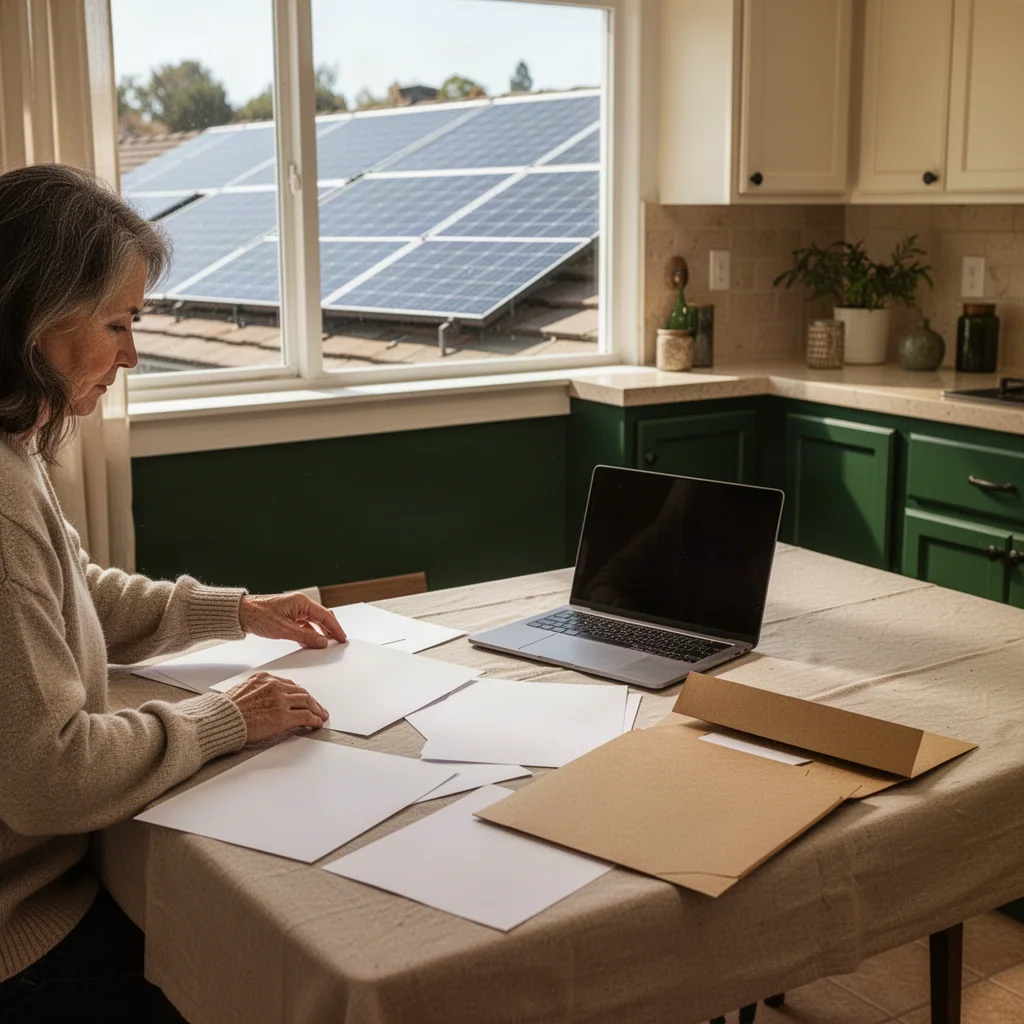
Your solar installer has closed, but the lender is still requesting payments. An installation contract, loan agreement and equipment warranties can involve separate companies; the installer going out of business does not automatically cancel the financing obligation.
Find the legal name of the lender or servicer, your signed loan and installation documents, the equipment serial numbers and the manufacturer warranty terms. Request written instructions for unresolved work or defects, and seek qualified legal or consumer-assistance advice before withholding payments or agreeing to a replacement contract.
Quick answer: the installer's closure and your payment contract are separate questions.
A solar installer's closure or bankruptcy does not automatically cancel a separate loan, lease or power-purchase agreement. First identify the current lender or servicer, the equipment owner, the party responsible for service, and whether the system was completed, inspected and given utility permission to operate before stopping payment.
Keep paying or withholding payment is not a decision this article can make for a particular homeowner. The signed contracts, any assignment, project status, dispute notices and applicable law control. Send a documented written dispute, request the records behind any completion or disbursement decision, and obtain qualified consumer-law advice before taking an action that could trigger delinquency, collections or credit reporting.
First, identify exactly what you signed
If you bought the system with cash, there may be no ongoing solar financing payment at all. If you took a loan, find the promissory note, lender disclosures and current servicer statements. If you signed a lease or power-purchase agreement (PPA), identify the company that owns the equipment and the entity that receives payments. A PPA typically bills for electricity produced; a lease usually charges for use of the system under its specific terms.
Look for separate installation and finance contracts. One may describe engineering, permits, installation and warranties, while the other governs repayment. Ask the lender or owner in writing whether your contract was assigned, who currently holds it and whom you should contact for disputes and service. Do not assume that a familiar logo on a bill proves it is the legal creditor.
An assigned loan may preserve claims and defenses—but only when the rule applies.
The FTC Holder Rule can preserve certain consumer claims and defenses against a holder of a covered consumer credit contract when those claims could be asserted against the seller. That does not mean every solar loan is covered or that an installer closure automatically erases the balance. Find the Holder Rule notice in the credit contract and have a qualified adviser evaluate the transaction, alleged seller misconduct and available remedy.
A loan owner or servicer should be able to identify the current creditor and explain its dispute process. Ask for the signed credit agreement, itemization of amount financed, payment history, disbursement or completion evidence and any transfer notice. Continue to meet written deadlines while the dispute is reviewed.
The warranty may survive—but you must find the responsible party
Panel and inverter manufacturers can provide equipment warranties separate from the installer's workmanship promise. Those are not interchangeable. A manufacturer might cover a defective component while excluding labor, diagnostic visits, roof removal or shipping. An installer-only workmanship warranty may become difficult to enforce if that business ceases operations.
Locate serial numbers, equipment brands, monitoring accounts, proof of purchase, utility permission-to-operate records and all warranty PDFs. Contact each manufacturer about authorized service providers and claim requirements. If you have a dangerous electrical issue, contact a licensed professional rather than experimenting with inverters, batteries or rooftop wiring.
If the system was never finished, verify what triggered lender payment.
An uncompleted or non-operational installation raises different questions from a working system whose installer later closed. Check final inspection records, utility permission to operate, equipment delivery and commissioning. Keep dated photographs, project schedules, change orders, notices and every written communication. Ask the lender whether the installation was marked complete and what evidence it relied on before disbursing funds.
California homeowners can submit a solar complaint to the Contractors State License Board. CSLB's online process asks for signed forms and supporting project documents. A complaint may support investigation or discipline, but it is not itself a release from a finance agreement. A financing complaint may also belong with the CFPB or California DFPI, depending on the company and issue.
The installer may also owe you something in the bankruptcy case.
If the installer owes a refund, deposit, warranty performance or another obligation, the homeowner may be a creditor in the bankruptcy case. U.S. Courts materials explain that Official Form 410 is used to make a proof of claim, while Chapter 11 rules can make claim filing depend on how the debtor scheduled the claim. Do not assume a complaint to another agency files a bankruptcy claim or preserves a court deadline.
Locate the actual court case and claims notice, confirm the debtor's exact legal name, and review the bar date and claim status with bankruptcy counsel or the official court resources for that case. A proof of claim can preserve a request for payment; it does not guarantee a distribution or restore warranty service.
Build one evidence file, then send separate notices.
Make one folder with the installation agreement, financing or PPA contract, recent bills, payment history, warranties, equipment serial numbers, inspection and permission-to-operate records, and screenshots showing production or fault messages. Add advertisements and messages supporting any claim about price, savings, tax benefits, completion or warranty service.
Send separate written notices to the lender or servicer, equipment owner, manufacturer and any successor service company. State the problem, requested remedy and records needed; use the dispute address and delivery method in each agreement. CFPB, DFPI and CSLB complaints can create useful records, but none replaces a contractual notice, lawsuit deadline or bankruptcy proof of claim.
Before you sign with any future installer
Ask which party will own your loan or lease after closing, who services it, whether any maintenance obligation can transfer, and how warranty claims will be handled if the installer disappears. Require clear terms for delays, failed inspections and nonperformance. A solar system should remain maintainable—and the contract understandable—even if the original salesperson is no longer around.
Build a status record for the unfinished project
Create a dated description of the system as it stands: equipment delivered, equipment installed, inspections completed, utility approval obtained and faults observed. Match each milestone to the contract, invoice or lender communication that mentions it. If financing was disbursed, ask the creditor which milestone or completion document supported that disbursement and request a copy. Avoid speculating about who signed a document until you have the record.
Keep the creditor inquiry separate from the service inquiry. The creditor needs account identifiers and the disputed transaction history; a replacement installer needs equipment models, photographs, safety concerns and warranty information. Request a written diagnostic scope before commissioning repair work, and preserve the original condition with photographs when appropriate. Record every promised callback and next action. This organized status record helps the parties answer specific questions without repeatedly reconstructing the entire installation history, and gives an adviser a clearer basis for evaluating any claimed remedy.
Frequently asked questions
Does my solar installer's bankruptcy automatically cancel my solar loan?
No. An installer closing or filing bankruptcy does not automatically cancel a separate loan, lease or PPA. Identify the current creditor or equipment owner and use the written dispute process before changing payments.
Can the FTC Holder Rule help with a solar financing dispute?
The Holder Rule may preserve claims and defenses against a holder of a covered consumer credit contract when those claims could be asserted against the seller. Coverage and remedies depend on the contract and transaction, so it is not an automatic loan cancellation.
What if the lender paid the installer before the solar system worked?
Request the lender's completion and disbursement records, then compare them with inspection, commissioning and utility permission-to-operate records. Dispute any inaccurate completion evidence in writing and preserve photographs and communications.
Do equipment warranties survive when a solar installer closes?
Manufacturer warranties may remain even when an installer workmanship warranty becomes difficult to enforce. Contact each manufacturer with model and serial numbers and ask which parts, labor, shipping and authorized service providers are covered.
Should I file a proof of claim in the installer's bankruptcy?
A homeowner owed a refund or another obligation may be a creditor. U.S. Courts provides Official Form 410, but whether and when to file a proof of claim depends on the case, the debtor's schedules and court deadlines. Use the official case notice or qualified bankruptcy advice.
Should I stop paying while I dispute an unfinished solar project?
Do not assume that withholding payment is risk-free. It can trigger delinquency, collections or credit reporting. Send the dispute and document request promptly, meet applicable deadlines, and obtain consumer-law advice about the specific agreement before stopping payment.
Questions worth asking
- Who is the current legal holder and servicer of my solar agreement?
- Is the installation complete, inspected and approved to operate?
- Which warranties are manufacturer-backed and which depend on the installer?
- What written dispute and complaint procedures apply to my loan, lease or PPA?
- What would happen to my credit if I stopped paying during a dispute?
Related guides
Solar financing red flagsSix questions before signingSeparate equipment and workmanship warrantiesIdentify who controls the system and contractCompare solar financing obligationsUnderstand California cancellation rightsReview transferred solar obligationsStill researching solar?
Search homeowner guides by topic, electric utility, or location.
Sources and further reading
Sources reviewed: October 23, 2026. Confirm changing details with the official sources.
These links identify documents and resources used for this guide. Listing a source does not mean it was independently checked today. Utility rates, incentives, product specifications and program availability may change; confirm the latest version and effective date with the source.
CFPB — Solar financing issue spotlight (August 2024)California Contractors State License Board — File a complaintCSLB — Solar complaint formU.S. Department of Energy — Homeowner's Guide to Going SolarFTC — Holder in Due Course RuleU.S. Courts — Official Proof of Claim Form 410U.S. Courts — Chapter 11 Bankruptcy BasicsCFPB — Submit a complaintCalifornia DFPI — Submit a complaintCSLB — Solar SmartStart with a home energy checkup
Organize your usage, home details and goals before comparing proposals.
Try the home energy checkupReady to compare companies?
Explore provider options when you are ready to request quotes.
Explore provider options