
How Much Does It Cost to Replace a Solar Inverter or Home Battery?
As of October 23, 2026, there is no responsible nationwide replacement price for a solar inverter or home battery. Diagnose the failure, confirm warranty scope, and compare complete installed quotes.
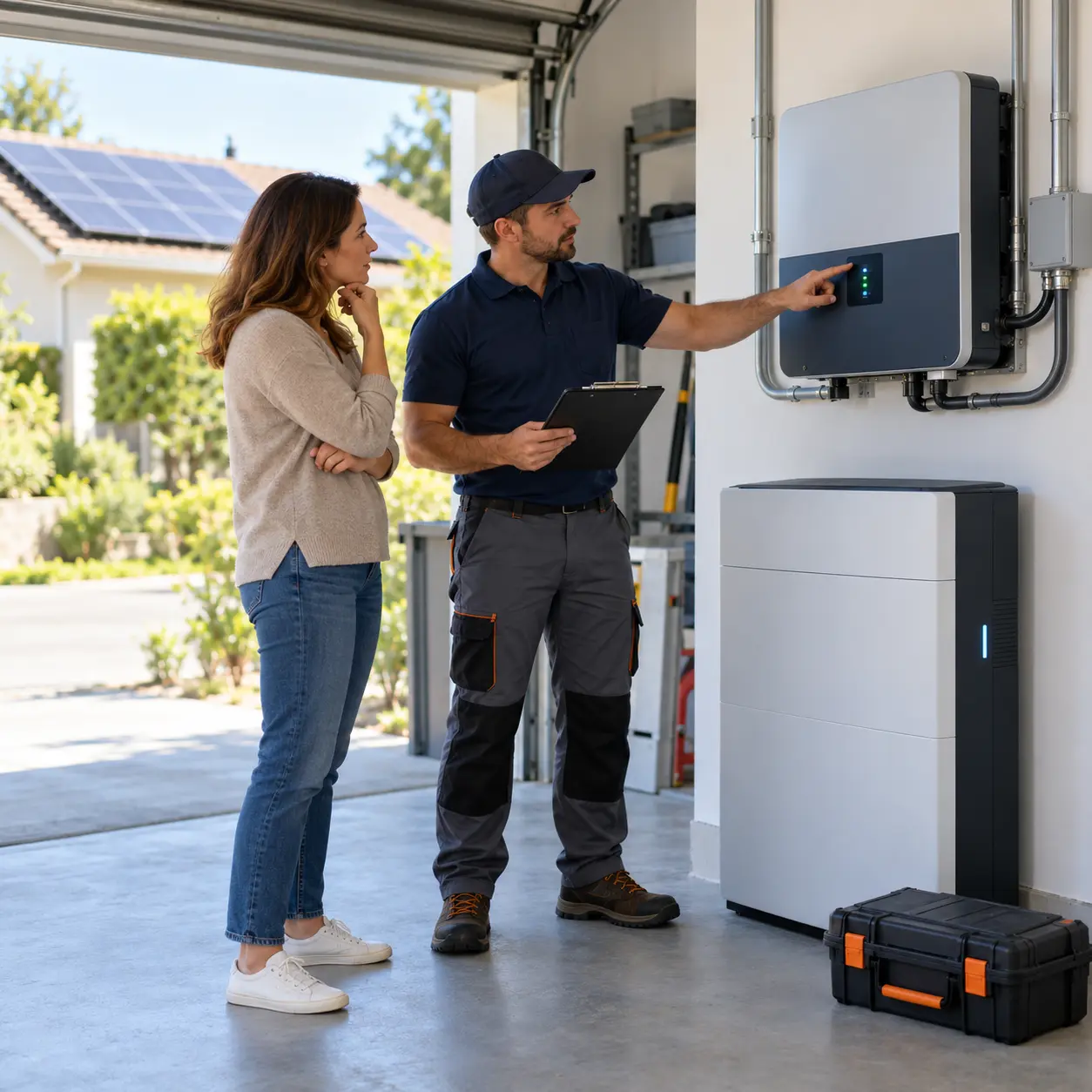
Quick answer: price the diagnosed repair, not a generic replacement.
As of October 23, 2026, there is no responsible nationwide replacement price for a solar inverter or home battery. A useful out-of-pocket estimate adds diagnosis, uncovered equipment, labor, shipping, permits or utility work, compatibility hardware, access and taxes, then subtracts confirmed warranty or service-plan payments. Get the manufacturer and contractor to identify each line item in writing.
Do not authorize a whole-device replacement from an app alert alone. First establish whether the problem is the inverter, battery module, controller, gateway, communications, wiring, breaker, meter configuration or another system component. A covered part can still leave diagnosis, travel, labor, removal, reinstallation or shipping costs depending on the exact warranty.
Before pricing a replacement, establish what failed.
An inverter converts solar DC electricity into usable AC power; microinverters perform conversion at individual panels, while string inverters serve broader groups of modules. Low production can also result from shading, breakers, communication problems or utility restrictions. An offline phone app does not automatically mean a dead inverter: a monitoring outage may involve Wi-Fi, a gateway or delayed cloud reporting even while the solar equipment continues producing.
Compare observed generation with prior data for the same season, note exact fault codes and verify whether the device is reporting recently. Leave live electrical testing and rooftop access to qualified technicians. Ask for a written diagnosis that identifies the failed component and explains why replacement—not repair or reconfiguration—is necessary.
Every quote needs the complete installed cost.
Separate the equipment price from diagnostic labor, removal and installation, commissioning, permit fees, utility or interconnection work, shipping, communications upgrades, mounting or access work, taxes and any required safety-standard changes. Identify the exact replacement model and serial number, and state whether the part is new, refurbished or manufacturer-provided.
If the original model has been discontinued, confirm compatibility with the array, optimizer or microinverter architecture, monitoring portal and utility interconnection agreement. A cheaper box that requires expensive rewiring might not be the cheaper project.
A battery replacement involves more than capacity.
Home storage systems combine battery cells with electronics, software, protective devices and sometimes an external controller or transfer switch. If a battery fails, the technician must determine whether the defect is in the battery module, inverter, gateway, communication equipment or installation. Replacing an entire bank for a software or controller problem can waste money.
Ask the manufacturer for the exact warranty claim procedure, coverage start date, throughput or cycle limitations, retained-capacity conditions, connectivity requirements, transfer rules and labor provisions. A battery reaching reduced capacity after years of operation is not necessarily the same as a defective battery under warranty. Use the warranty version tied to the installed model and purchase or installation date rather than a current marketing summary.
Why published online prices can mislead.
Retail prices for loose inverters or battery enclosures rarely include licensed installation, system integration or permits. Online estimates can also confuse an additional storage module with a fully installed, backup-ready system. A new backup installation may require gateway equipment, critical-load circuitry or panel work that does not apply to an identical warranty replacement.
Collect two or more written, itemized quotes where possible. Compare the exact scope and equipment part numbers, not just a total. If the home already has an inverter and monitoring ecosystem, ask the manufacturer which replacements it supports.
The contractor disappeared: what happens to the warranty?
An installer workmanship warranty and a manufacturer equipment warranty are separate promises. Installer closure may complicate labor coverage, but some manufacturer warranty rights may remain. Review the actual documents and request an authorized service provider. Keep commissioning reports, serial numbers, invoices, permit records and evidence of monitoring failures.
If financing, a lease or PPA is involved, contact the system owner before authorizing changes. The agreement may place repair responsibility on the owner or require specific approved vendors. Unauthorized modifications can complicate warranty or contract claims.
Should you repair or redesign the system?
An older inverter may be compatible with a straightforward replacement. A larger redesign, battery upgrade or roof project can involve new costs and changed warranties. Compare a repair-only price to a clearly itemized modernization alternative. Before adding capacity or changing equipment, ask the local permitting authority and utility whether a permit, listed equipment, revised interconnection application or protection-setting review is required.
Do not let a contractor use an equipment fault as proof that an entirely new solar system is necessary. Demand the diagnosis, compatible options and written cost differences first.
The repair record you'll want five years later.
Save the fault report, old and new model and serial number, parts list, warranty claim number, final invoice, permit or utility approval, updated single-line diagram and monitoring credentials. These records make future service easier and can matter when transferring the system with the home.
A replacement decision you can compare in writing
Imagine that an older inverter stops communicating and a contractor immediately recommends replacing both the inverter and battery. Before accepting, ask for a diagnosis that distinguishes a communication failure, an inverter fault and a battery fault. Request two clearly scoped options when technically available: restoring the existing supported system and replacing or redesigning it. This is a decision example, not a claim that either option will suit every installation. The technician should identify compatibility constraints and any unavailable parts rather than leaving you to infer them from a high total price.
For each option, ask which existing equipment remains, what new controls or gateway are needed, which labor is covered and what approvals must be obtained. Include removal, transport, disposal or recycling, commissioning and monitoring setup in the quoted scope. If a warranty administrator supplies a part, have the quote show that part separately from uncovered service costs. Compare the cash total before adding financing, and ask whether there is a charge for diagnosis if you decline the proposed replacement.
Finally, define what successful completion means for your home. The system should have a documented equipment list, understandable monitoring and a written explanation of the functions restored. If you previously had outage backup, confirm that the proposed work preserves the agreed backup function rather than only restoring grid-connected generation. Ask what happens if commissioning reveals another failed component and whether extra work requires separate approval. Keep those terms with the diagnostic report so an apparent bargain does not become an open-ended authorization.
Ask the contractor to state whether the repair changes monitoring subscriptions or communication hardware. A replacement that restores energy production but leaves the owner unable to retrieve future alerts creates another service problem. Include account access and a visible, current production record in the completion discussion.
Frequently asked questions
How much does it cost to replace a solar inverter or home battery?
There is no responsible nationwide price that applies to every home. The complete cost depends on the diagnosed component, exact compatible model, warranty contribution, labor, shipping, permits, utility work, communications or gateway changes, access and taxes. Compare itemized installed quotes.
Does an inverter or battery warranty include replacement labor?
Sometimes, but not always and not necessarily in full. Product, installer-workmanship, labor-reimbursement and service-plan coverage can be separate. Read the warranty tied to the installed model and date, then obtain written confirmation of diagnosis, removal, reinstallation, travel and shipping coverage.
Does an offline monitoring app mean the inverter failed?
No. A monitoring outage can result from Wi-Fi, a gateway, communications hardware or delayed cloud reporting while the energy equipment continues operating. Compare production and meter data and obtain a qualified diagnosis before ordering replacement hardware.
Should a weak home battery be replaced as one complete unit?
Not automatically. The fault may involve a battery module, inverter, controller, gateway, sensor, communications or installation. Ask for the fault codes, capacity test or other diagnostic evidence and the manufacturer's supported repair path.
Can I replace an inverter or battery with a different model?
Only after checking electrical, communications, monitoring, optimizer or microinverter, battery, gateway, safety, permit and utility-interconnection compatibility. A lower equipment price can be offset by redesign or rewiring.
Who pays for repairs on a leased or PPA solar system?
The signed lease or PPA controls ownership and service responsibility. Contact the system owner before authorizing changes and confirm the approved service provider, warranty process and payment responsibility in writing.
Questions worth asking
- Has a qualified technician confirmed which component failed?
- Which equipment and labor costs are actually covered by warranty?
- Does a replacement require electrical redesign or permit work?
- Will the replacement preserve monitoring and utility interconnection compatibility?
- Who is responsible for repairs under my loan, lease or PPA?
Related guides
Separate equipment, labor and workmanship coverageDocument underproduction and request a diagnosisFind warranty and service paths after installer closureUnderstand battery installation and commissioningCheck battery scope and supporting equipmentIdentify who can authorize system changesPreserve repair and warranty records for a home saleCompare itemized repair and replacement quotesStill researching solar?
Search homeowner guides by topic, electric utility, or location.
Sources and further reading
Sources reviewed: October 23, 2026. Confirm changing details with the official sources.
These links identify documents and resources used for this guide. Listing a source does not mean it was independently checked today. Utility rates, incentives, product specifications and program availability may change; confirm the latest version and effective date with the source.
DOE — Homeowner's Guide to Going SolarFTC — Written warranties and repair coverageCSLB — Home improvement contractor checklistCSLB — Check a contractor licenseCalifornia Energy Commission — Solar Equipment Lists ProgramCalifornia Energy Commission — Energy Storage Permitting GuidebookEnphase — U.S. warranty documentsSolarEdge — Inverter warranty and warranty extensionsSolarEdge — Limited Product WarrantyTesla — Powerwall owner documentsTesla — 2026 U.S. Powerwall Limited WarrantyStart with a home energy checkup
Organize your usage, home details and goals before comparing proposals.
Try the home energy checkupReady to compare companies?
Explore provider options when you are ready to request quotes.
Explore provider options