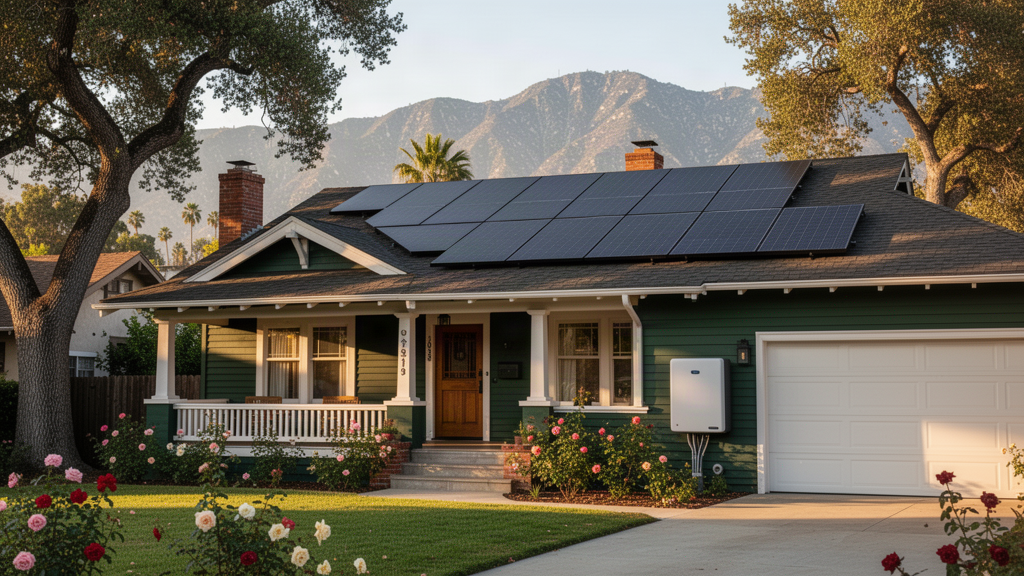
ARTICLE 1 OF 4 · PASADENA SOLAR SERIES
Pasadena Solar & Battery Rebates
PWP programs, eligibility, current rates and deadlines.

Pasadena, California · The City of Roses

A free four-part homeowner education series. Compare PWP rebates, understand how to pay for solar, avoid costly contract surprises and learn what home batteries really do. Independent education; not affiliated with or endorsed by Pasadena Water and Power.
Pasadena Water and Power’s current residential solar rebate has requirements a quote may not explain. Confirm these with PWP before subtracting a rebate from a contractor’s price:
Read PWP’s official residential rebate rules and application requirements. This independent guide does not establish rebate eligibility, a particular utility account, roof permission or estimated savings.
For a new residential solar installation completed in 2026, do not assume the former 30% federal Residential Clean Energy Credit (Section 25D) is available. The IRS says the credit is not allowed for expenditures after December 31, 2025; for solar, the expenditure is generally treated as made when original installation finishes. Paying a deposit in 2025 does not by itself make a system completed in 2026 eligible.
That federal deadline is separate from any qualifying Pasadena Water and Power rebate or export compensation. Ask for a written quote showing the equipment cost before incentives, each incentive's eligibility and documentation, and a version of the financial comparison without an assumed 2026 Section 25D credit. Prior-year claims and carryforwards are different tax questions requiring individual review.
Official guidance: IRS: credit termination and installation timing FAQ. This is independent consumer education, not tax advice or a determination of a household's rebate eligibility.
PWP's residential solar rebate and its net-surplus electricity compensation are different programs. The rebate concerns an eligible purchase and installation; net-surplus compensation concerns qualifying excess solar electricity exported to PWP and requires a separate election on the utility's enrollment form.
PWP describes both an annual and a monthly or bi-monthly net-metering compensation option, with different billing schedules and surplus-credit calculations. Do not assume every exported kilowatt-hour earns the full retail electricity price or that a contractor's projected dollar savings are guaranteed. Confirm your enrollment, metering method, rate schedule and treatment of any surplus credits with PWP before comparing quotes.
Check the enrollment form, not just the sales estimate. PWP's 2025 Net Energy Metering and Surplus Compensation Enrollment Form says customers who do not return the form generally continue under their existing net-metering option and, unless they previously submitted a compensation request, receive no net-surplus compensation. Ask PWP to confirm your current election and whether any prior form is on file. PWP says customers can change their net-metering option after 12 months; do not assume switching changes previous billing periods retroactively. Keep a copy of your completed election and confirmation.
Read PWP's official net-surplus compensation options and the official 2025 enrollment form. This guide does not determine the utility account or the applicable compensation rate for an individual property.
PWP programs, eligibility, current rates and deadlines.
Compare cash, loans, zero-down sales tactics and contract escalators.
Understand warranty terms, roof considerations and system monitoring.

Battery sizing, grid outages and future PWP program participation.