
Pasadena, California · The City of Roses
ARTICLE 3 OF 4 · PASADENA SOLAR EDUCATION SERIES
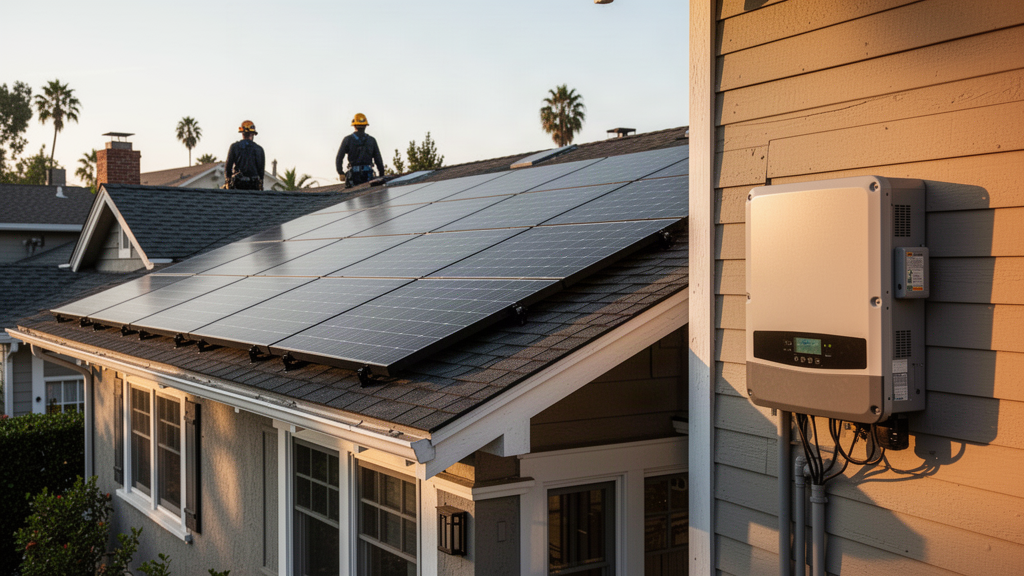
Pasadena Solar Panels, Inverters & Installation: A Practical Guide
Know what to inspect, compare three quotes and understand the process from site study to permission to operate.
← Back to Pasadena series overviewCompare the system, not just the brand
Request module model numbers, performance warranties, degradation assumptions, inverter architecture and monitoring access. Compare a string inverter, string-plus-optimizers and microinverters according to roof geometry and shading; none is universally best.
For a partly shaded Pasadena roof, the right power electronics may help reduce mismatch losses. Demand an address-specific shade model rather than an unsupported promise that every panel will perform equally.
How to check an existing solar array
First open the manufacturer's inverter or monitoring app and review yesterday's, monthly and year-over-year production. Confirm the system is connected and look for alerts. Compare production to similar sunny days and the installer's estimate, accounting for season and shade.
Check whether the inverter has reported a fault or lost communications. Do not climb onto the roof, touch exposed wiring, open energized equipment or disconnect connectors to 'test' a panel. Have a qualified installer investigate persistent abnormal production. WattPlan estimates potential new systems; it cannot diagnose existing panel performance.
The Pasadena approval sequence
Ask the contractor to identify responsibility for PWP interconnection submission, required documents and review, building and fire permits, inspections, meter changes, and PWP permission to operate. Physical installation may take only days, but permit and utility steps can take longer.
Keep the interconnection approval and final permits in your records. Verify PWP's current written rebate application deadlines separately for solar and batteries; do not assume the same start date applies to both.
Protect the roof and verify the contractor
Get at least three bids and request a roof-penetration warranty, clear installation workmanship coverage, written equipment warranty provisions, and proof of applicable CSLB licensing. For historic or HOA properties, check permissions early. PWP's installation-activity list is not an endorsement.
Understand the meter and annual production estimate
A bidirectional meter measures energy moving between a home and the utility. It is separate from the solar inverter's generation monitoring. Ask the installer which meter PWP will install, when the meter replacement occurs, and whether there are fees for it.
A quote should display system DC capacity, CEC-AC capacity, annual production and the assumptions about losses, shading, orientation and panel degradation. Watch for promises based on a different utility's tariff.
Verify safety listings and warranty coverage
For panels, read both the equipment defects warranty and the long-term performance guarantee; they are not interchangeable. For inverters, look at the actual coverage period, replacement labor rules, and whether monitoring access continues after a sale or installer closure.
No reputable contractor should ask you to open a junction box or disconnect PV connectors to prove performance. Use the monitoring app and let licensed professionals conduct electrical checks.
Homeowner questions, answered
Tap a question to expand its answer.
Is a string inverter always worse when there is shade?
No. Results vary by system design, bypass diodes, optimizers, module layout and shading. Compare realistic modeled production and cost.
Does a utility inspection mean I can turn the solar system on?
Do not assume so. Wait for PWP's formal permission to operate and follow the installed system's instructions.
Should I wash or manually test panels myself?
Avoid roof and electrical hazards. Review monitoring data first; hire a qualified professional for inspection or cleaning when needed.
Do I need a roof replacement before solar?
Not always. Compare remaining roof life to the solar system's expected service life and the cost of removing and reinstalling panels for later roof work.
Which contractor license should I verify?
PWP's battery incentive calls for a C-10 electrical contractor. Other solar installation work may involve a C-46 solar contractor. Check current CSLB classifications and each firm's actual licensed scope.
Does monitoring replace a professional inspection?
No. Monitoring can reveal alerts or unusual production but cannot fully evaluate wiring, roof attachment, fire safety or internal faults.
Can my existing inverter work with a new battery?
Maybe. It depends on the inverter, battery architecture, load panel, control hardware and interconnection. Ask the installer for a documented retrofit design.
Official resources and independent verification
Start with PWP's written terms and ask the utility directly about eligibility and funding. Home Solar Simplified is not a PWP program or endorsement.