
What It Costs to Run Your Air Conditioner
As of October 26, 2026, estimate AC cost from average electrical input, actual cooling runtime and the applicable marginal electricity rate—then separate usage charges from fixed bill items.
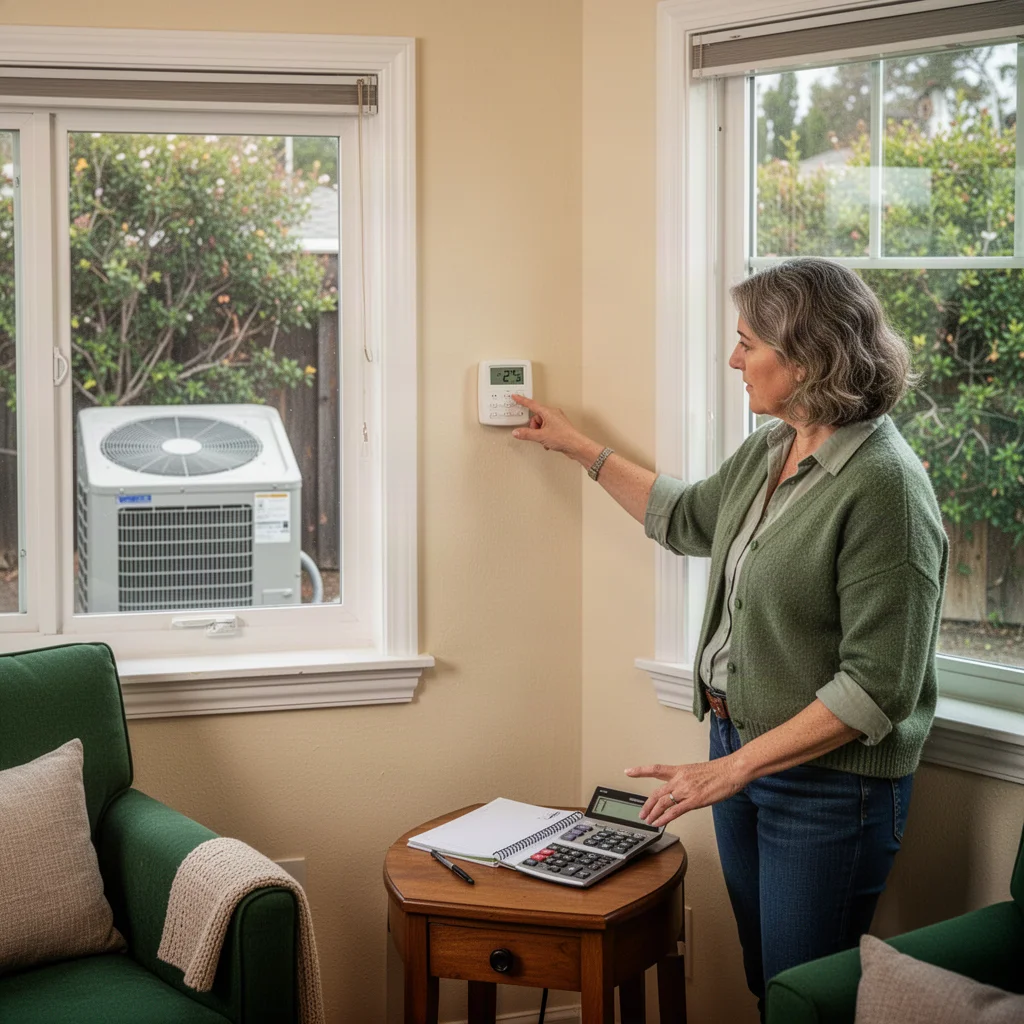
Quick answer: calculate AC cost from average input, runtime and the applicable rate
As of October 26, 2026, estimate air-conditioner usage with kWh = average electrical input in kW × cooling runtime in hours. Then multiply the kWh used in each pricing period by the applicable rate for that period.
That estimate is not automatically the change in the whole bill. Time-of-use periods, tiers, generation and delivery charges, fixed charges, credits and other bill items can make the bill-level result different.
Collect the three inputs before doing the math
Record the equipment's average electrical input while cooling, its actual cooling runtime and the electricity price that applies during that runtime. Also note the utility, rate-plan name, season and billing dates so the calculation can be reproduced.
Use a consistent period. Daily data are useful for testing assumptions; a full billing cycle is better for comparing the estimate with the statement.
Do not use BTU per hour as electrical watts
BTU per hour describes cooling capacity, while watts or kilowatts describe electrical input. A capacity label by itself cannot show how much electricity the equipment consumes.
Efficiency ratings such as SEER2 or EER2 help compare equipment under standardized conditions, but they do not replace measured input and runtime for reconstructing one home's bill.
Include the outdoor unit and the indoor blower
A central system's compressor and outdoor fan are not its only electrical loads. The indoor blower that moves conditioned air also uses electricity and may run before or after the compressor.
If separate equipment supplies the blower, a meter or equipment estimate that covers only the outdoor unit will undercount total cooling-system use. Ask a qualified HVAC professional which components are included in any measurement.
Use average electrical input, not a single maximum number
A nameplate can support equipment identification and safety decisions, but it may not equal the average power drawn throughout a cooling cycle. Conventional equipment starts and stops, and variable-speed equipment can change input as conditions change.
For a rough estimate, use a documented average input over the same operating period as the runtime. Do not treat startup surge, breaker size or a maximum rating as continuous consumption.
Distinguish cooling runtime from thermostat schedule
A thermostat being set to cool for eight hours does not mean the compressor ran for eight hours. Cycling depends on outdoor temperature, indoor gains, thermostat setting, home construction, equipment capacity and condition.
A smart thermostat may report cooling runtime, but confirm what its metric includes. Some reports track compressor calls rather than the electricity used by every system component.
Use interval data as a cross-check, not automatic proof
Utility interval data can show when whole-home electricity use rose, and it can help compare similar days. It includes every appliance on the meter, so an afternoon increase is not automatically all air conditioning.
Compare periods with similar weather and household activity, and use equipment-specific monitoring only when it is safely installed and interpreted. Never open energized equipment or improvise direct measurements.
Match use to the exact time-of-use period
On a time-of-use plan, split estimated kWh among the actual price periods and seasons in the tariff. SCE states that its TOU prices vary by time, day and season; LADWP offers both standard and time-of-use residential options.
There is no universal peak window. Confirm the current plan printed on the bill and the utility's current schedule instead of applying another provider's hours.
Use the marginal tier for added cooling use
On a tiered plan, the next kWh of cooling can be priced differently from the household's average historical price. Estimate the added usage against the marginal tier or applicable block rather than dividing the entire bill by total kWh and assuming that result applies everywhere.
If the rate combines tiered and time-based elements, calculate with the current tariff or the utility's official comparison tool. Preserve the assumptions with the estimate.
Keep fixed charges outside the usage calculation
Fixed charges and minimum charges may remain even if cooling use changes. Generation, delivery, riders, taxes, credits and adjustments may also be shown separately or bundled differently by provider.
To estimate the bill impact of cooling, compare charges that actually vary with the relevant kWh. Do not subtract the whole bill's fixed charges from an appliance calculation or double-count components already included in an all-in rate.
Work through a clearly illustrative example
Suppose fictional equipment averages 1.0 kW across the components being counted and accumulates four cooling-runtime hours per day. Over 30 days, the illustrative use is 1.0 kW × 4 hours × 30 days = 120 kWh.
At an invented applicable usage rate of $0.30 per kWh, the illustrative usage charge is $36. This is not a typical equipment rating, current utility price, savings forecast or estimate for a particular home, and it excludes fixed charges and other bill items.
Compare scenarios with the same assumptions
Build daily, weekly and monthly scenarios from the same average input, runtime definition and tariff. Changing only one input at a time shows whether weather-driven runtime, pricing periods or an equipment assumption explains the difference.
For example, increasing the fictional runtime from four to six hours daily changes monthly use from 120 to 180 kWh. Do not claim the dollar difference until those additional hours are assigned to the correct rate periods.
Weather and the home can change runtime
Hotter outdoor conditions, solar gain, air leakage, insulation, duct condition, indoor moisture, occupants and heat-producing appliances can all change how long the system runs. A month-to-month cost comparison is weak if these conditions are ignored.
Cooling degree days can help describe weather differences, but they do not measure an individual system. Keep sufficient cooling for household health and comfort, especially during extreme heat.
Check maintenance and airflow before assuming replacement
ENERGY STAR's maintenance guidance identifies filters, coils, airflow and equipment condition as important checks. Restricted airflow can reduce comfort and efficiency, and the indoor blower should be included in the system review.
Follow the manufacturer's filter instructions and keep outdoor equipment clear as directed. Refrigerant, electrical, coil and performance diagnosis belongs with a qualified technician; a high bill alone does not prove the equipment must be replaced.
Use efficiency ratings for replacement decisions, not bill reconstruction
SEER2 and EER2 are standardized efficiency measures that support model comparison. Installed performance also depends on equipment sizing, ductwork, airflow, controls, installation quality and climate.
Before replacing equipment, obtain a written load and system assessment, exact model numbers, efficiency ratings, scope, warranties and modeled assumptions. Compare complete installed options rather than converting one month's bill into a guaranteed payback.
Bottom line: keep a traceable cooling-cost worksheet
Keep the equipment model, components counted, average electrical input, runtime source, billing dates, utility, rate plan, price periods, tiers, weather context and calculation together. Mark estimates and measured values separately.
A defensible result explains what was counted and what was excluded. If the purpose is to challenge a bill or choose a rate, verify the result against the current utility tariff and statement before acting.
Frequently asked questions
How do I calculate the electricity cost of running my air conditioner?
Multiply average electrical input in kilowatts by actual cooling runtime in hours to estimate kWh, then multiply the kWh in each pricing period by its applicable rate. Keep fixed and non-usage bill items separate.
Can I calculate AC electricity use from BTU alone?
No. BTU per hour describes cooling capacity, not electrical input. Use watts or kilowatts, actual runtime and the applicable electricity rate.
Should I use the AC nameplate watts in the calculation?
Use nameplate data only as a documented starting point. Average operating input can differ because equipment cycles or changes speed; do not treat breaker size, startup surge or a maximum rating as continuous use.
Does central-air electricity use include the indoor blower?
It should. The outdoor compressor and fan plus the indoor blower can all contribute to cooling electricity use, even when they are in separate pieces of equipment.
Can a smart thermostat tell me exactly how many kWh my AC used?
Usually not by itself. It may report cooling runtime or calls, while electricity use also depends on equipment input and which components the report covers. Whole-home interval data include other appliances.
Will running my AC at night always cost less?
No. Savings depend on the exact utility, rate plan, season and time-of-use schedule. A flat rate may provide no time-of-day price difference, and comfort and health remain important.
Does an AC cost estimate include fixed electric-bill charges?
Not unless they are added separately. Appliance estimates normally calculate variable usage charges; fixed charges, minimums, credits, taxes and other adjustments can remain on the bill.
Does a high cooling bill mean I need to replace my air conditioner?
No. First verify usage, rate, weather, filters, airflow, thermostat operation and equipment condition. Use a qualified technician for electrical, refrigerant and performance diagnosis before making a replacement decision.
Check eligibility and take the next step
These links open the official program or its application service.
USAGov's energy-assistance pageQuestions worth asking
- How do I calculate the electricity cost of running my air conditioner?
- Can I calculate AC electricity use from BTU alone?
- Should I use the AC nameplate watts in the calculation?
- Does central-air electricity use include the indoor blower?
- Can a smart thermostat tell me exactly how many kWh my AC used?
- Will running my AC at night always cost less?
- Does an AC cost estimate include fixed electric-bill charges?
- Does a high cooling bill mean I need to replace my air conditioner?
Related guides
Understand each charge on an electric billMatch usage to the correct time-of-use periodFind official electricity-bill assistanceRead a Southern California Edison billReview SCE time-of-use pricing with solarDiagnose an unusually high LADWP billInvestigate other causes of a high electric billUnderstand why a bill may remain after solarPlan solar around heat-pump electricity useStill researching solar?
Search homeowner guides by topic, electric utility, or location.
Sources and further reading
Sources reviewed: October 26, 2026. Confirm changing details with the official sources.
These links identify documents and resources used for this guide. Listing a source does not mean it was independently checked today. Utility rates, incentives, product specifications and program availability may change; confirm the latest version and effective date with the source.
DOE Home Cooling 101DOE consumer guide to home heating and coolingENERGY STAR heating and cooling maintenance checklistENERGY STAR efficient heating and cooling guidanceENERGY STAR room air conditionersEIA residential air-conditioning electricity FAQEIA energy use in homesSCE residential time-of-use plansSCE appliance energy-use cost calculatorLADWP residential electric ratesLADWP energy-saving tipsCPUC electric-rate resourcesUSAGov energy-bill assistanceStart with a home energy checkup
Organize your usage, home details and goals before comparing proposals.
Try the home energy checkupReady to compare companies?
Explore provider options when you are ready to request quotes.
Explore provider options