LG Home 8 Battery: 14.4 kWh, Warranty and Phase-Out
LG is phasing out its energy-storage business while honoring limited warranties. Existing owners and inventory buyers should verify Home 8 service, parts, labor exclusions and installer support.
Published by Home Solar Simplified · Editorial standards
https://homesolarsimplified.org/solar-guides/lg-home-8-battery-homeowner-guide
Published by Home Solar Simplified. Includes 10 linked sources. Documented editorial date: .
A citation or editorial date does not guarantee a tariff, incentive or program remains unchanged today.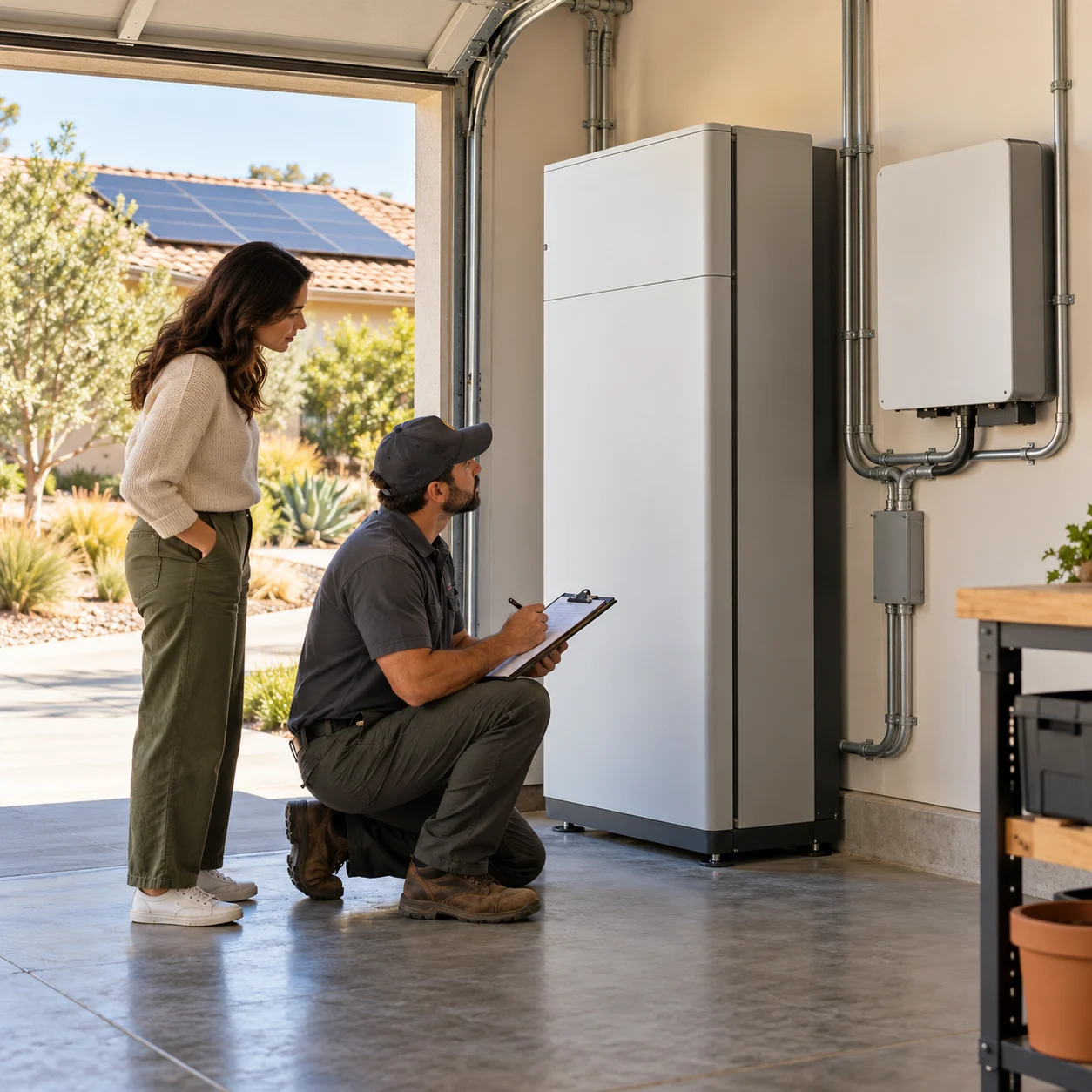
As of October 24, 2026, LG says it is phasing out its energy-storage business globally while continuing to honor applicable limited warranties. That makes installer support, replacement parts and warranty labor especially important for existing Home 8 owners and anyone considering remaining inventory.
Home 8 has documented 14.4 kWh usable capacity and 7.5 kVA rated discharge, but those figures do not establish which appliances will run or how quickly service will be available. Verify the SE Box, backed-up circuits, system-level power, warranty conditions and named local service provider before relying on the product.
Quick answer: LG is phasing out its ESS business, so serviceability now belongs in the buying decision.
As of October 24, 2026, LG says it is transitioning away from the energy-storage business globally and phasing out the product line. LG also says it will continue honoring applicable limited warranties. Existing Home 8 owners should preserve their installer, serial-number, commissioning, ThinQ and warranty records; a prospective buyer considering remaining inventory should verify sale status, installer authorization, replacement-part access and a local service path before signing.
Home 8 still has documented specifications, but a product sheet does not resolve long-term field support. Ask the seller to identify who will diagnose faults, submit a claim, supply replacement parts, perform labor and pay removal and reinstallation costs. Do not treat an available unit, a warranty headline or an online listing as proof of current manufacturer distribution or timely service.
One Home 8 stores 14.4 kWh and is rated at 7.5 kVA discharge
LG's May 2024 user manual lists 15.8 kWh total capacity, 14.4 kWh usable capacity, 7.5 kVA rated AC discharge and 5.4 kVA rated AC charging for Home 8 on 120/240-volt split-phase service. In backup mode, the manual lists 9.0 kVA maximum discharge for ten seconds and 7.5 kVA rated discharge, subject to battery-output derating and installation conditions.
Kilowatt-hours describe stored energy; kVA is apparent power. Do not automatically read 7.5 kVA as 7.5 kW for every appliance mix and power factor. Require the installer to state real continuous kW, per-leg limits, short-duration output, largest motor-start requirement, protected circuits and any soft-start or load-control assumptions for the permitted design.
The SE Box and backed-up panel determine what the battery can operate
Home 8 is an AC-coupled all-in-one battery and power-conversion unit. LG's manual says the separate Smart Energy Box provides the automatic transfer function, monitoring and system control; a third-party PV inverter is not supplied by LG. The manual describes both whole-home and partial-home configurations, but neither label means every load can run simultaneously.
Ask for a single-line diagram showing the Home 8, SE Box, service equipment, solar inverter, backed-up panel and non-backup loads. Commissioning should include a controlled grid-loss test, verification of transfer behavior, restart behavior and confirmation that the supported solar inverter can resume generation during an outage after the documented delay. Keep the permitted plan and test record.
Up to four units changes energy—not automatically usable whole-home power
LG's manual says up to four Home 5 or Home 8 units can connect to one SE Box, while also stating that Home 5 and Home 8 units cannot be mixed in the same configuration. Two Home 8 units total 28.8 kWh of stated usable energy; four total 57.6 kWh. Those totals describe energy capacity, not guaranteed combined real-power delivery or permission to add units later.
For a multi-unit proposal, require the exact number of units, supported firmware, SE Box limits, electrical-service capacity, branch protection, installation clearances, system-level continuous and ten-second output, and the load schedule. Do not multiply the per-unit 7.5 kVA apparent-power figure and present the result as assured kW or HVAC-start capability.
Installation and commissioning require trained, licensed service providers
LG's installation manual says installation, commissioning, service and maintenance must be performed by trained service providers who satisfy applicable licensing and local requirements. The Home 8 enclosure is listed at about 359 pounds, and the manual includes working-space, outdoor-opening and impact-protection considerations that may affect a garage or exterior location.
The same manual warns that the system is not intended as a primary or backup power source for life-support systems or other uses where failure could cause injury or catastrophic damage. Homeowners with medical or safety-critical needs should plan a separate, medically appropriate resilience strategy and should not rely on an ordinary residential battery alone.
The written warranty starts at five years and has a 59.8 MWh operating limit
LG's current U.S. warranty lists a five-year parts warranty and five-year usable-capacity warranty for a qualified system, with at least 70% usable-capacity retention and a 59.8 MWh total-operation limit. It describes an extension to ten years for qualified systems registered with ThinQ and connected to the internet for remote firmware updates, while also noting that California residents' warranty rights are not diminished merely by failure to register.
Read the entire contract. It says replacement parts may be new or remanufactured and excludes labor, troubleshooting, fuel, transportation, installation, removal and reinstallation costs, subject to applicable law. It also ties coverage to qualified installation, operation and service and says the warranty follows subsequent owners of the original installation location—not a battery moved elsewhere.
Use LG's published support path, but keep the installer in the loop
LG's transition notice directs warranty-related support first to the installer and publishes Home 8 technical support at lghome8support@lge.com and (844) 926-6829. Save those channels, but get an installer-specific escalation path in writing because the warranty excludes several field-service costs.
Existing owners should save the warranty PDF, proof of purchase and installation, serial numbers, installer license and contact information, ThinQ ownership access, internet-connection history, permits, inspection approval and event logs. A buyer of a home with Home 8 should confirm the system remains at its original installed location and obtain written transfer and monitoring-access instructions.
California approval and price comparisons still require exact-model verification
The California Energy Commission says equipment-list information may be used by utilities and local governments, but project acceptance depends on the applicable utility and authority having jurisdiction. Verify the exact Home 8, SE Box, solar inverter and any required control equipment against current permit and interconnection requirements before relying on an older approval or proposal.
Compare the full cash price including remaining inventory status, battery and SE Box, backed-up panel or service work, third-party solar-inverter integration, permits, utility steps, labor, monitoring, commissioning and a written service contingency. Current IRS guidance says the Residential Clean Energy Credit is unavailable for property placed in service after December 31, 2025, so do not subtract a presumed 30% homeowner credit from a 2026 installation.
Make service continuity a written purchase condition
Before committing to remaining inventory, ask who will support the complete Home 8 and SE Box installation locally and how that commitment is documented. Separate the manufacturer's written coverage from the installer's promise to diagnose, travel, remove equipment and perform labor. Ask what the provider would propose if a required component becomes unavailable. This is a contingency question, not a prediction that a particular part will fail or disappear.
Request the equipment's condition, model and serial numbers, documentation, owner-access process and commissioning scope before accepting delivery. If a replacement system might eventually require electrical redesign or new approvals, ask how that possibility affects today's price comparison without assuming a future cost. Keep the answers alongside the invoice and warranty. A support plan is most useful when it names a responsible company, explains the next step and identifies which expenses remain uncertain, rather than simply assuring you that somebody will help.
Illustrated explanation
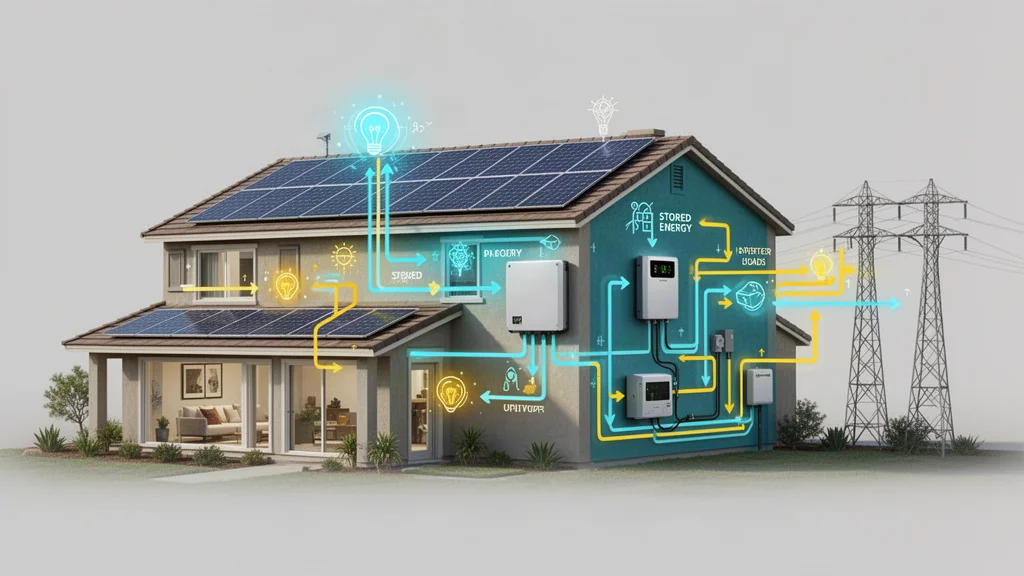
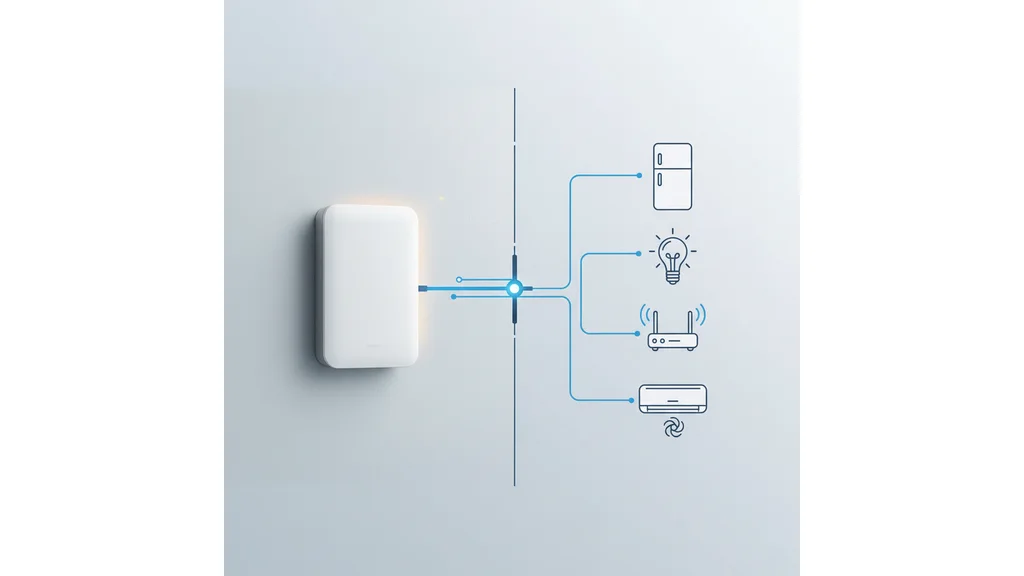
How to plan home battery storage
- List essential loads. Write down the appliances and circuits needed during an outage, including their running watts and any starting surge.
- Compare power and energy. Check continuous output in kW separately from usable stored energy in kWh. Estimate runtime using realistic consumption and conversion losses.
- Verify the operating mode. Ask whether the system can isolate from the grid, recharge from solar during an outage, and comply with the applicable utility interconnection requirements.
For further independent technical context: California Energy Commission — Energy Resources. This is an educational reference, not an installer recommendation.
Frequently asked questions
Is LG still selling and supporting Home 8?
LG says it is phasing out its energy-storage business globally and will honor applicable limited warranties. Verify current inventory, seller authority, parts availability and a local installer service path before buying.
How much energy and power does one LG Home 8 provide?
LG's May 2024 manual lists 14.4 kWh usable capacity, 7.5 kVA rated discharge and 9.0 kVA maximum backup discharge for ten seconds. The permitted design determines real kW and supported loads.
Can LG Home 8 provide whole-home backup?
The manual supports whole-home and partial-home architectures, but neither guarantees every appliance can run together. Require a circuit list, real-power and motor-start calculations, reserve assumptions and an outage test.
Can several LG Home 8 batteries be connected together?
LG's manual says up to four Home 8 units can connect to one SE Box, subject to service capacity and system design. Two units total 28.8 kWh and four total 57.6 kWh of stated usable energy.
How long is the LG Home 8 warranty?
The written warranty starts with five years for parts and usable capacity, including 70% retention and a 59.8 MWh limit. It describes a ten-year extension for qualifying ThinQ-connected systems and includes a California registration notice.
Does the LG Home 8 warranty pay installer labor?
The written warranty excludes labor and several troubleshooting, transportation, removal and reinstallation costs, subject to applicable law. Ask the installer who pays each field-service cost before purchase.
Questions worth asking
- Is LG Home 8 still a practical new purchase after LG's ESS phase-out announcement?
- What are the usable energy and backup power limits?
- Which equipment and circuits are required for outage backup?
- Can several Home 8 units be combined?
- What does the five-year or ten-year warranty actually cover?
- Who will diagnose and service the system locally?
Related guides
Size battery storage from loads and runtimePlan Southern California backup loadsUnderstand managed whole-home backupReview permits, clearances and commissioningRead battery parts, labor and service exclusionsCheck a battery proposal before signingCompare current home-battery systemsUse a product-neutral battery scorecardStill researching solar?
Search homeowner guides by topic, electric utility, or location.
Sources and further reading
Updated: October 2026. Confirm changing details with the official sources.
These links identify documents and resources used for this guide. Listing a source does not mean it was independently checked today. Utility rates, incentives, product specifications and program availability may change; confirm the latest version and effective date with the source.
LG — Home 8 specification sheetLG — Home energy storage business transition noticeLG — Home 8 limited warrantyLG — Home 5/8 user manual (May 2024)LG — Home 5/8 installation manual (May 2024)California Energy Commission — Solar Equipment Lists ProgramCalifornia Energy Commission — Energy Storage Permitting GuidebookU.S. Department of Energy — Homeowner's Guide to Going SolarCalifornia Public Utilities Commission — Solar Consumer Protection GuideIRS — Residential Clean Energy CreditStart with a home energy checkup
Organize your usage, home details and goals before comparing proposals.
Try the home energy checkupReady to compare companies?
Explore provider options when you are ready to request quotes.
Explore provider options