Will Your Solar Battery Run the Air Conditioner? A Backup Guide for Southern California Homeowners
Before paying for whole-home backup, ask what starts, what runs together and how long your chosen loads can operate.
Program information checked October 5, 2026. Confirm current availability with the administrator.
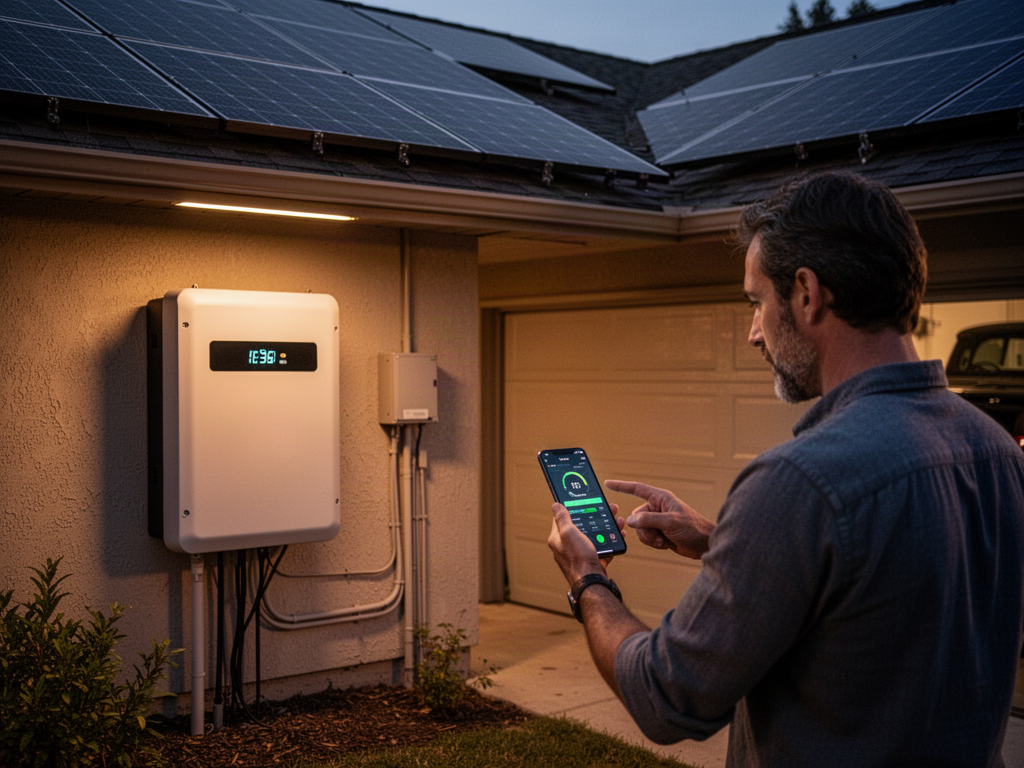
Name the outage you are planning for
Begin with the experience you want during an outage. Keeping food cold, staying connected and lighting selected rooms may be enough. Running cooling equipment, cooking electrically and charging a vehicle requires a different conversation.
For homeowners in Los Angeles, Ventura and Orange counties, the useful question is not simply whether a battery is included. It is what the exact installed configuration can do at your address. Ask the installer to walk through loss of grid power, normal backup operation and restoration.
Check three numbers, not just battery size
Usable energy, measured in kWh, helps describe how much electricity is available. Continuous power in kW describes how much the system can supply at once. Starting or surge capability matters for equipment that needs extra power when it starts.
Air-conditioning performance cannot be determined from a battery's energy capacity alone. Ask the designer to verify the cooling equipment's actual requirements, the inverter limits and other simultaneous loads. Have any proposed changes to equipment or controls included in the price.
Essential circuits and broader backup are different designs
Ask for a written list of the backed-up circuits, and identify loads that are excluded. If automatic load management is proposed, learn which appliances it can disconnect and when. A sales phrase such as whole-home backup does not establish that every load can run simultaneously.
Request a demonstration or documented explanation of the actual configuration. Solar recharging during an outage also depends on equipment settings, conditions and available sunlight. Standard grid-connected panels alone generally shut down when grid power fails.
Estimate runtime with clear assumptions
In a fictional example, 10 kWh available to the selected loads divided by an average 0.5 kW load gives 20 hours. At an average 2.5 kW load, it gives four hours. These teaching figures are not a particular product's runtime guarantee.
Real consumption changes as appliances cycle. Losses, battery operating limits, the state of charge when the outage begins and weather affect the outcome. Ask for overnight and extended-outage scenarios, not just a sunny-day estimate. Medical equipment requires a dependable separate plan based on its actual requirements.
Decide how much energy to reserve
A battery used for daily bill management may discharge before an outage starts. Ask what reserve is maintained and how the system changes behavior when an outage is expected. Greater reserve can leave less stored energy available for routine bill management.
Read rebate and participation terms before enrolling. A payment tied to battery operation may create discharge obligations or control permissions. Verify those requirements alongside your backup priority; an incentive should not obscure how the system will operate.
Price the backup work explicitly
Separate the storage equipment from wiring, backup controls, circuit changes, permitting and commissioning. Compare the service plan, warranty terms and who supports the system if the installing contractor is unavailable.
Before signing, obtain an agreed circuit list, power limits, starting-load assessment and runtime scenarios. These documents make the purchase easier to evaluate than a larger battery count or a premium brand name alone.
Questions worth asking
- Can this configuration start my cooling equipment?
- Which large loads can operate together?
- What is excluded from backup?
- What reserve will be maintained?
- Who verifies the system's outage operation after installation?
Related guides
Before you buy solar in LA, Ventura or Orange CountyCPA rebate requirementsBattery energy and power explainedSources and further reading
DOE — Solar and Resilience BasicsCPUC — California Solar Consumer Protection GuideExplore more for your home
Home Solar Simplified
Explore solar education, battery planning and home energy tools to prepare for your next decision.
Explore Home Solar SimplifiedConnectPoint ISP
Visit ConnectPoint ISP to explore home internet options and ask about service availability at your address.
Visit ConnectPoint ISP