Burbank Battery Rebate in 2026: Amounts, Rules and Backup Tradeoffs
BWP currently lists $275/kWh and an enhanced $530/kWh tier for qualifying solar-paired batteries. Verify the tier, funding and 10-year operating commitment before buying.
Published by Home Solar Simplified · Editorial standards
https://homesolarsimplified.org/solar-guides/burbank-battery-rebate
Published by Home Solar Simplified. Includes 7 linked sources. Documented editorial date: .
A citation or editorial date does not guarantee a tariff, incentive or program remains unchanged today.
Quick answer: confirm the tier and operating plan before buying
As of October 24, 2026, Burbank Water and Power publishes a standard rebate of $275 per kWh and an enhanced rebate of $530 per kWh for customers not eligible for the federal tax credit. BWP's current application says residential customers are no longer eligible for that federal credit except in some leased solar-and-battery cases, but BWP staff still make the final tier, capacity, eligible-cost and payment determination. Ask BWP to confirm your tier and current funding before signing or ordering equipment.
The rebate applies only to qualifying new batteries of at least 5 kWh installed with new or existing solar. It is capped at the first 100 kWh and cannot exceed eligible net cost after other financial incentives. Applications are first come, first served; funding is limited and a rebate is not guaranteed. The central tradeoff is operational: participating batteries must discharge at least 80% of capacity every day during BWP's 4–7 p.m. peak period and remain installed for ten years.
How the two published rebate tiers work
For an illustrative 10 kWh qualifying system, the published arithmetic is $2,750 at $275 per kWh or $5,300 at $530 per kWh. These are alternative maximum calculations, not stackable payments and not guaranteed awards. BWP calculates the final rebate from qualifying capacity and net eligible cost, which subtracts other received or expected battery-related financial incentives.
The IRS says the homeowner Residential Clean Energy Credit is unavailable for property placed in service after December 31, 2025. BWP's February 6, 2026 application therefore states that residential customers generally use the enhanced tier, with a possible exception for some leased installations. Do not let an installer decide the tier: submit the facts to BWP and obtain the program's determination.
Equipment, permit and six-month application requirements
The battery must be purchased new and unused, permanently installed with new or existing solar, certified by a nationally recognized testing laboratory, able to receive demand-response or load-control signals, and at least 5 kWh. BWP excludes gifted, resold, rebuilt, rented and certain leased units under its equipment conditions. Ask BWP whether the exact model and system configuration qualify; a state equipment-list entry alone is not a BWP approval. The City of Burbank offers an automated solar and energy-storage permit path for qualifying single-family installations, but the actual project must follow the City's applicable permit and inspection route.
The BWP customer of record must submit a complete signed application no later than six months after installation. The current checklist calls for itemized invoices and proof of payment, a W-9 matching the account holder and address, final permits, two installed-system photos, and the signed battery/solar contract; tenants also need the property-owner permission form. Keep the installation date, passed inspection and submission proof together.
The daily-discharge and ten-year commitment
BWP requires the battery to discharge at least 80% of capacity daily during 4–7 p.m. and lets the utility request proof of programming. The customer also agrees to participate in future eligible demand-response or load-control programs. Ask for a written commissioning plan that shows the programmed window, backup reserve, recharge behavior, internet or communications dependency and who can change settings.
The system must remain installed for ten years. Removing a functioning battery early can trigger a prorated fee, although BWP describes possible exceptions for malfunction. Before accepting the rebate, ask BWP in writing how a home sale, replacement under warranty, equipment failure, extended outage or desired reserve-setting change is handled.
Test the rebate against your outage goal
A nameplate kWh figure is not a promised outage runtime. For a simple illustration only, if a fully charged 10 kWh battery discharged 80% during the required window, about 2 kWh would remain before later household demand, conversion losses, any protected reserve or recharge. Actual behavior depends on the approved configuration and settings.
List the circuits that must run in an outage, their running energy, motor-start power and desired hours. Then ask the installer to model an outage beginning after 7 p.m. under the proposed BWP-compliant settings. Confirm with BWP whether emergency or outage conditions change the discharge requirement. Do not count the same stored energy both as mandatory daily dispatch and as guaranteed overnight backup.
New 2026 solar billing makes self-use worth modeling
BWP says solar systems permitted after January 1, 2026 enter Solar Net Billing, with exports compensated at BWP's avoided cost of energy at the applicable time. Existing qualifying solar customers remain on their existing net-metering structure, subject to rate changes. A battery can change how much solar a home consumes versus exports, but the result depends on the home's interval usage, solar production, battery settings, losses and the applicable billing plan.
Request a proposal model showing the same home with and without storage under the correct BWP billing structure. Keep battery-rebate value, bill savings and outage value as separate lines; a rebate does not prove that the battery will pay for itself.
Use a before-and-after-rebate decision sheet
Record the full battery cash price, eligible battery hardware, qualifying installation labor and permits, ineligible solar-only work, other incentives, the BWP-confirmed tier, and the resulting net price. Add financing charges separately. Compare the project first with no rebate, then with only a written BWP determination; do not subtract an estimated payment from a loan budget.
Before signing, verify the contractor's license, exact battery model, final permit responsibility, application owner, six-month deadline, funding status, daily operating settings, ten-year obligation and early-removal terms. Home Solar Simplified provides education; BWP alone decides program eligibility and payment under the current rules.
Keep a reproducible commissioning record
At commissioning, ask the installer to provide screenshots showing the programmed operating window, reserve setting, equipment identity and date. Also record the support contact authorized to correct a programming problem. Save a second set after any firmware update, warranty replacement or change to the monitoring account. If actual operation later differs from the agreed plan, compare the dated records before attributing the problem to the utility or battery hardware. Ask BWP which evidence it would want for a review rather than assuming a screenshot alone satisfies every program requirement. This record is particularly useful when the installer, manufacturer and utility each manage different parts of the system and need to establish when a setting changed.
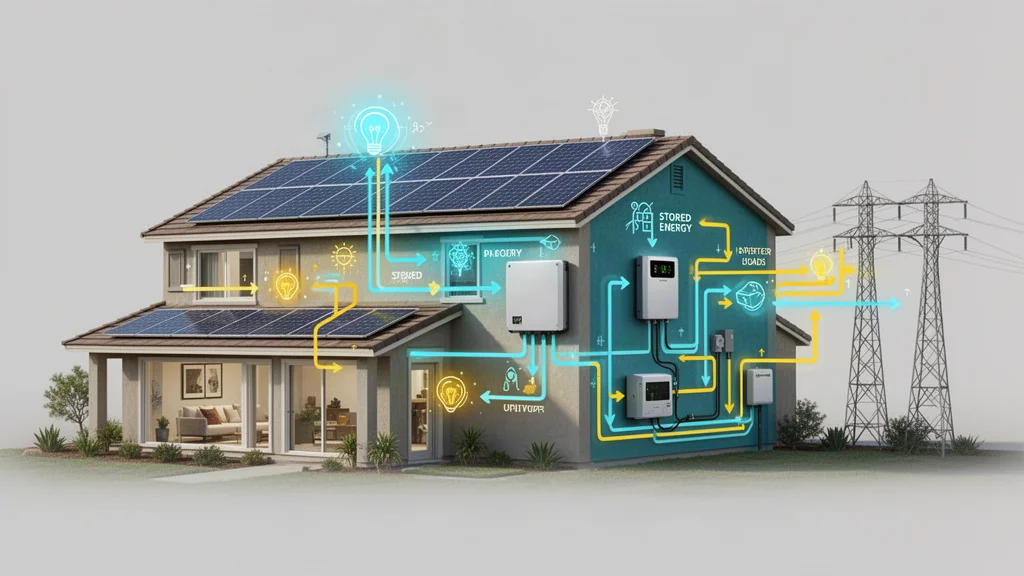
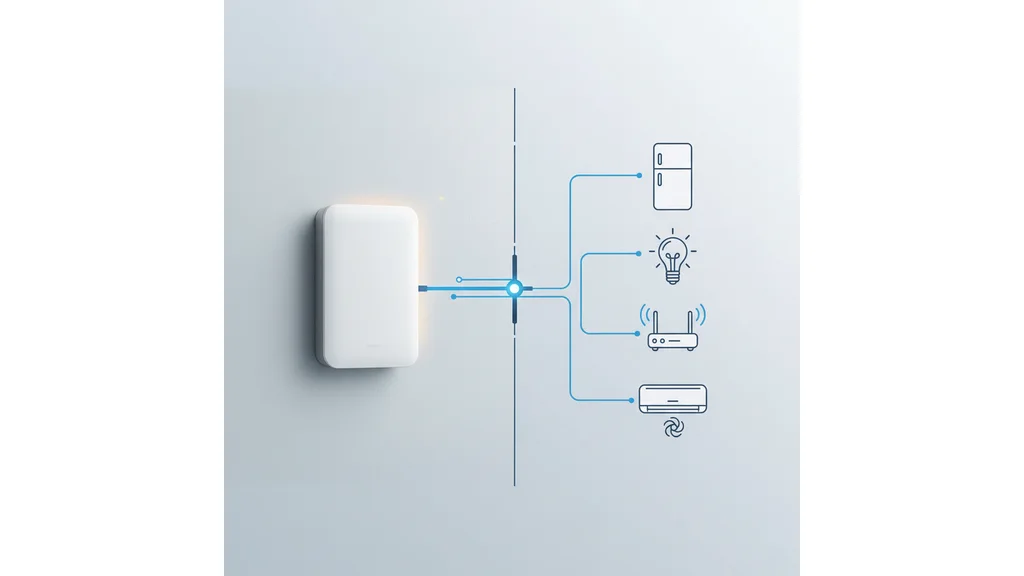
Illustrated explanation
How to plan home battery storage
- List essential loads. Write down the appliances and circuits needed during an outage, including their running watts and any starting surge.
- Compare power and energy. Check continuous output in kW separately from usable stored energy in kWh. Estimate runtime using realistic consumption and conversion losses.
- Verify the operating mode. Ask whether the system can isolate from the grid, recharge from solar during an outage, and comply with the applicable utility interconnection requirements.
For further independent technical context: California Energy Commission — Energy Resources. This is an educational reference, not an installer recommendation.
Frequently asked questions
How much is the Burbank battery rebate in 2026?
BWP currently publishes $275 per kWh and an enhanced $530 per kWh tier, limited to the first 100 kWh and eligible net cost. BWP determines the final tier, qualifying capacity, eligible costs and payment; funding is limited and not guaranteed.
Who qualifies for BWP's $530-per-kWh enhanced tier?
BWP's February 6, 2026 application says customers not eligible for the federal tax credit qualify for the enhanced tier and says residential customers are generally no longer eligible, except in some leased cases. BWP must decide the specific application.
What is the deadline to apply?
The BWP customer of record must submit a complete signed application and required documents no later than six months after the battery installation date. A late or incomplete submission can be ineligible.
Does the program require the battery to discharge every day?
Yes. BWP's current terms require at least 80% of battery capacity to discharge daily during the 4–7 p.m. peak period, with programming verification upon request. Confirm reserve and outage behavior before enrolling.
What happens if the battery is removed before ten years?
BWP says early removal of a functioning battery can trigger a prorated fee based on the rebate and years in service. The program describes possible malfunction exceptions; ask BWP how replacement, sale and failure scenarios are handled.
Can a Burbank battery rebate be combined with Solar Net Billing?
The rebate requires a battery paired with new or existing solar. Solar systems permitted after January 1, 2026 use BWP's Solar Net Billing structure, while qualifying existing systems remain on their prior structure. Model the battery under the billing plan for the actual account.
Check eligibility and take the next step
These links open the official program or its application service.
Download the official Burbank battery rebate application (PDF) Review BWP eligibility, required documents and submission instructionsQuestions worth asking
- Which per-kWh rate applies to my project?
- Has BWP confirmed funding and the exact model before I sign?
- Which costs are eligible after other incentives?
- How will the 4–7 p.m. discharge setting affect backup?
- Who tracks the six-month deadline and ten-year commitment?
- What happens if I sell, replace or remove the battery?
Related guides
Evaluate your battery backup needsSee all solar rebates and assistance optionsSize storage from critical loads and runtimePlan backup circuits and outage prioritiesCompare home batteries on normalized specsReview the battery proposal before signingUnderstand installation, inspection and commissioningUse the Southern California buying checklistAsk the six contract questionsStill researching solar?
Search homeowner guides by topic, electric utility, or location.
Sources and further reading
Updated: October 2026. Confirm changing details with the official sources.
These links identify documents and resources used for this guide. Listing a source does not mean it was independently checked today. Utility rates, incentives, product specifications and program availability may change; confirm the latest version and effective date with the source.
Burbank Water and Power — Battery Storage ProgramBurbank Water and Power — Battery Storage Rebate Application v02.06.26Burbank Water and Power — Solar Net BillingIRS — Residential Clean Energy CreditCalifornia Energy Commission — Solar Equipment ListsCity of Burbank — Solar and battery storage permitsCalifornia Contractors State License Board — Check a licenseStart with a home energy checkup
Organize your usage, home details and goals before comparing proposals.
Try the home energy checkupReady to compare companies?
Explore provider options when you are ready to request quotes.
Explore provider options