How Do Solar Panels Work? From Sunlight to Home Electricity
As of October 26, 2026, solar cells make DC electricity, an inverter converts it to AC, the home uses what it needs, and the grid or battery handles the difference under system controls.
Quick answer: sunlight becomes usable home electricity in four stages
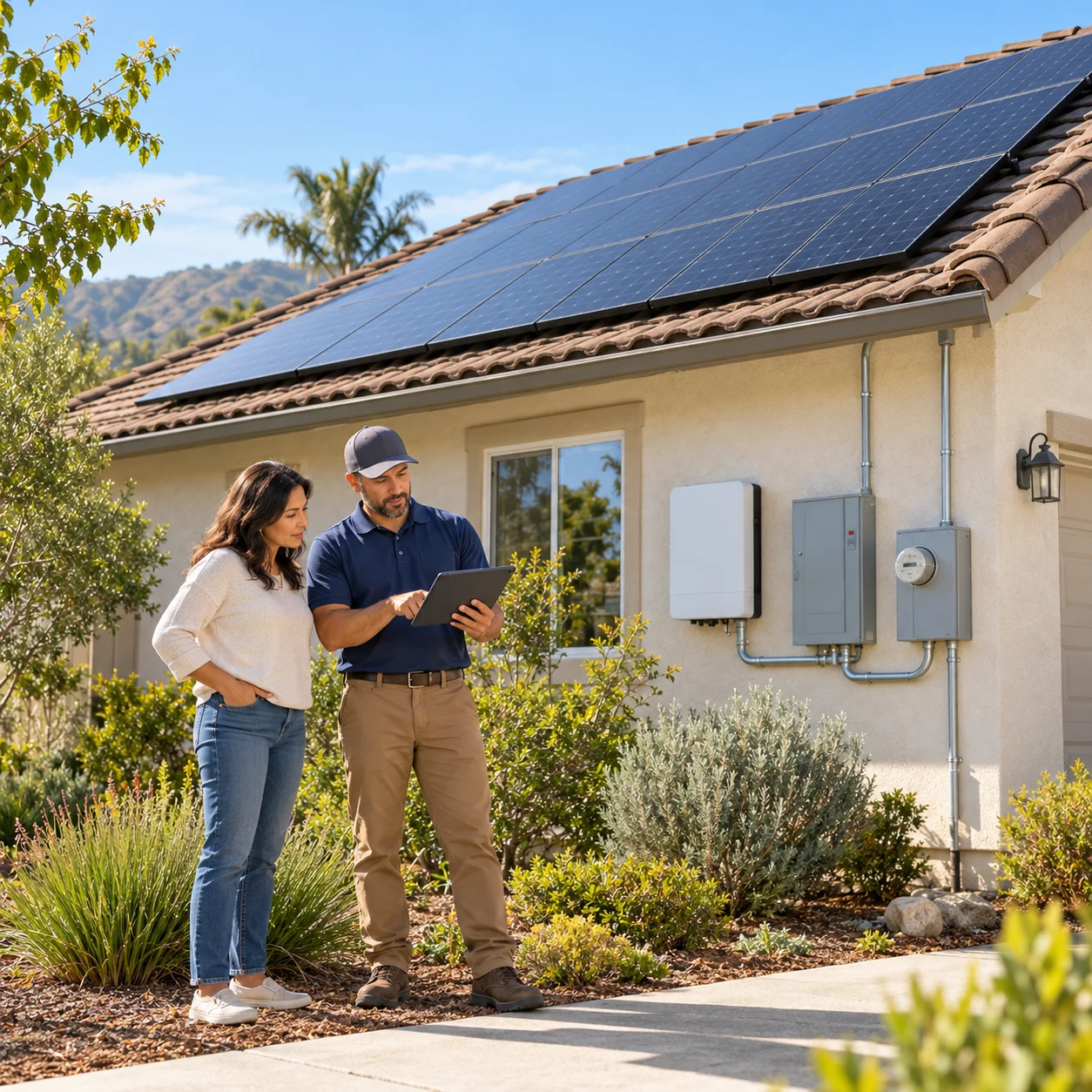
Photovoltaic cells in the panels turn sunlight into direct-current electricity. The inverter converts that DC electricity into alternating current for the home, the electrical panel routes it to operating loads, and the meter records electricity exchanged with the utility grid.
Solar output changes with sunlight and system conditions. If production is below the home's instantaneous use, the grid or a properly configured battery can supply the difference; if production is above use, eligible excess can charge a battery or flow to the grid under the system controls and utility rules.
Photovoltaic cells create direct-current electricity
A solar panel contains photovoltaic cells made from semiconductor materials. DOE explains that absorbed photons transfer energy to electrons; the cell's internal electric field moves those electrons, producing direct-current electricity. A module combines cells, strings connect modules electrically, and the complete group is the array.
The panels create electricity only while light reaches the cells. They do not store electricity, establish household AC power on their own or guarantee a fixed amount of energy. Cell material, light level, temperature and the rest of the system all affect output.
The inverter converts DC into grid-compatible AC
Most household appliances and the utility grid use alternating current, so an inverter converts the array's DC output to AC with the required voltage and frequency. The inverter also monitors operating conditions and can limit or disconnect output when the system or grid is outside permitted ranges.
A design may use one string inverter, module-level power electronics, microinverters or a hybrid inverter connected to a battery. Ask for the exact architecture, model numbers and one-line diagram; the word inverter alone does not describe where conversion occurs or how shade, monitoring, storage and backup are handled.
The electrical panel and grid balance the home's load
After conversion, solar electricity reaches the home's electrical system through its approved connection. Operating appliances use available power at that moment. When the home needs more than solar is producing, the shortfall comes from the grid or from an enabled battery operating within its limits.
When production exceeds onsite use, the system may charge a battery or export eligible excess through a bidirectional meter, subject to interconnection settings and any export limits. CPUC says California net-billing customers first use onsite generation to serve onsite load, but the bill value of exported energy is a separate tariff calculation and is not automatically equal to the retail price of later imports.
Power in kW is not the same as energy in kWh
Kilowatts describe power at an instant; kilowatt-hours describe energy accumulated over time. A 5 kW array operating at an average 3 kW for two hours produces 6 kWh during that interval. The example explains units, not a production forecast.
DC nameplate watts are a standardized panel rating. Actual inverter AC output can be lower because of irradiance, cell temperature, wiring, inverter conversion, clipping, shade, soiling and downtime. Annual kWh estimates must use site and design inputs rather than multiplying the nameplate by a fixed number of hours.
Weather, roof geometry and equipment change production
Clouds reduce irradiance, shade can affect one or more modules, and high cell temperature generally reduces module voltage and efficiency. Orientation, tilt, available roof area, dirt, wiring, mismatch and inverter limits also influence the power that reaches the home.
NREL's PVWatts can estimate production from system size, location, orientation and loss assumptions, but it is a model rather than a promise. Compare proposals using the same weather source and assumptions, ask for monthly as well as annual kWh, and require the provider to explain material differences.
Night, clouds and seasons change the direction of energy flow
At night, the array produces no photovoltaic electricity. Under clouds or during shorter winter days, it may produce less than the home needs; the grid or battery then supplies the difference. In bright conditions, production may exceed instantaneous use and flow to storage or the grid.
A utility bill combines imports, exports, tariff rules and non-energy charges. Solar monitoring usually shows generation, while a utility meter records grid exchange. Neither number alone shows total household consumption unless the system includes compatible consumption monitoring.
A standard grid-tied system usually shuts down in an outage
DOE says residential solar systems generally disconnect during a grid outage for safety. Ordinary grid-following equipment needs a grid reference and must not energize utility lines while crews may be working. Sunlight on the panels does not override this protection.
Outage power requires grid isolation equipment that separates the home from utility lines and forms a safe local electrical system. Depending on the design, that can include a compatible inverter, transfer or backup interface, protected-load panel, controls and storage. Confirm which circuits operate, their power limits, restart behavior and whether solar can recharge the battery while islanded.
A battery stores energy but does not create it
A battery can store some solar or grid energy for later use, subject to usable-capacity, power, reserve, temperature and control limits. Charging and discharging also involve losses, so one kWh sent into storage does not produce one full kWh at the loads.
Usable kWh describes duration; continuous and surge ratings describe which loads can operate or start. A battery can support evening self-use or backup, but those are different operating goals. Ask for the written control mode, protected loads and expected low-solar operation.
Solar monitoring and the utility meter answer different questions
The inverter or manufacturer app may report panel or system generation. The utility meter reports imports from and exports to the grid. Solar electricity consumed immediately behind the meter normally appears as neither an import nor an export, so generation and export totals should not be expected to match.
To estimate total household use over an interval, combine onsite solar consumption with grid imports using compatible consumption data. Before diagnosing underproduction, align date ranges, units and time zones, then compare the inverter portal, utility interval data and the proposal's monthly production estimate.
Verify equipment, interconnection and permission to operate
The California Energy Commission's equipment lists help verify listed modules and inverters, but the CEC says inclusion is not an endorsement or system-design approval. Permitting, utility interconnection and permission to operate are separate steps handled by the applicable authorities.
Do not intentionally energize or export from a new system before the installer and utility say it is permitted. Keep the approved plans, equipment data sheets, one-line diagram, inspection record, interconnection documents, permission-to-operate notice, warranties and monitoring credentials.
Use a commissioning checklist before accepting the system
Have the installer identify the exact modules, inverter, disconnects, meter, monitoring hardware and battery gateway, then provide a backed-up-circuits list if storage or backup is included. Ask for a safe demonstration of normal operation, grid loss, backup restoration and shutdown only where the installed design supports those modes.
Confirm that the contract, installed labels, monitoring portal and approved plans name the same equipment. Record expected monthly production, access permissions, alarm contacts, warranty responsibility and the party that will correct inspection or interconnection defects. Never open energized equipment or troubleshoot internal wiring yourself.
Bottom line: follow the energy path, then verify the controls
The core path is simple: photons reach photovoltaic cells, the array makes DC electricity, the inverter makes usable AC, and the home, battery and grid balance supply and demand under the installed controls. The equipment and tariff determine what happens to the difference.
A credible proposal should show that path for the actual home, quantify modeled kWh with disclosed assumptions and explain normal, nighttime, export and outage modes separately. Treat production, bill savings and backup as related but distinct claims that each need written evidence.
Frequently asked questions
Do solar panels work without direct sunlight?
They can produce electricity from diffuse light, so output may continue under clouds, but usually at a lower level than in strong direct sunlight. At night, photovoltaic panels produce no electricity.
Do solar panels power my home directly?
The array first produces DC electricity. The inverter converts it to AC, and the home's electrical system uses available power while the grid or a compatible battery supplies any shortfall. The exact path depends on the installed design.
Do solar panels store electricity?
No. Panels generate electricity when light reaches the cells. A separate compatible battery can store some energy, subject to usable-capacity, power, control and efficiency limits.
What does a solar inverter do?
It converts panel DC electricity into AC electricity used by the home and grid. It also monitors conditions and can limit or disconnect output. Some designs integrate storage or outage controls, but those functions are model- and system-specific.
What is the difference between kW and kWh?
kW measures power at an instant; kWh measures energy accumulated over time. System size is often stated in DC kW, while monthly or annual production and household consumption are stated in kWh.
What happens to extra solar electricity?
Depending on the equipment and controls, excess can charge a compatible battery or be exported through the utility meter. Export eligibility and bill credit value depend on the interconnection and tariff; export is not the same as onsite use.
Why does solar monitoring differ from the utility meter?
Solar monitoring usually reports generation, while the utility meter records grid imports and exports. Solar consumed immediately in the home normally appears as neither an import nor an export, and date ranges or time zones may also differ.
Will solar panels work during a power outage?
A standard grid-tied system usually disconnects for safety. Outage power requires equipment designed to isolate the home and form a local system, often including a compatible inverter, controls, backup interface and storage. Confirm the actual protected circuits and limits.
Questions worth asking
- Do solar panels work without direct sunlight?
- Do solar panels power my home directly?
- Do solar panels store electricity?
- What does a solar inverter do?
- What is the difference between kW and kWh?
- What happens to extra solar electricity?
- Why does solar monitoring differ from the utility meter?
- Will solar panels work during a power outage?
Related guides
Compare exact solar-panel modelsSize an array from household energy useCompare inverter architecturesDecide whether storage fits your goalsUnderstand the bill after solarDiagnose a high post-solar billPlan safe outage backupCheck whether a roof is solar-readyCompare proposals on the same scopeSolar planning in Los Angeles County
Electric utility rules, roof conditions and household electricity use vary by address. Explore regional guidance before relying on a statewide solar savings estimate.
Los Angeles County solar education San Fernando Valley: LADWP, panels and batteries Northridge solar planning Van Nuys solar quotes and utility questions Sylmar roof and battery backup planningStill researching solar?
Search homeowner guides by topic, electric utility, or location.
Sources and further reading
Sources reviewed: October 26, 2026. Confirm changing details with the official sources.
These links identify documents and resources used for this guide. Listing a source does not mean it was independently checked today. Utility rates, incentives, product specifications and program availability may change; confirm the latest version and effective date with the source.
U.S. Department of Energy — Solar Photovoltaic Technology BasicsU.S. Department of Energy — Solar Integration: Inverters and Grid Services BasicsU.S. Department of Energy — Solar Photovoltaic System Design BasicsU.S. Department of Energy — Solar and Resilience BasicsU.S. Department of Energy — Homeowner's Guide to SolarNational Renewable Energy Laboratory — PVWatts CalculatorCalifornia Energy Commission — Solar Equipment ListsCalifornia Public Utilities Commission — Customer GenerationCalifornia Contractors State License Board — Solar SmartFederal Trade Commission — Truthful Solar Claims and Consumer ProtectionsStart with a home energy checkup
Organize your usage, home details and goals before comparing proposals.
Try the home energy checkupReady to compare companies?
Explore provider options when you are ready to request quotes.
Explore provider options