Los Angeles County Solar Assistance: Check Utility, Eligibility and Funding
Los Angeles County has no single solar-assistance program. Check the electric utility, account provider, address, ownership, income rules and current funding before relying on rooftop, battery or bill-discount help.
Published by Home Solar Simplified · Editorial standards
https://homesolarsimplified.org/solar-guides/los-angeles-county-solar-assistance
Published by Home Solar Simplified. Includes 13 linked sources. Documented editorial date: .
A citation or editorial date does not guarantee a tariff, incentive or program remains unchanged today.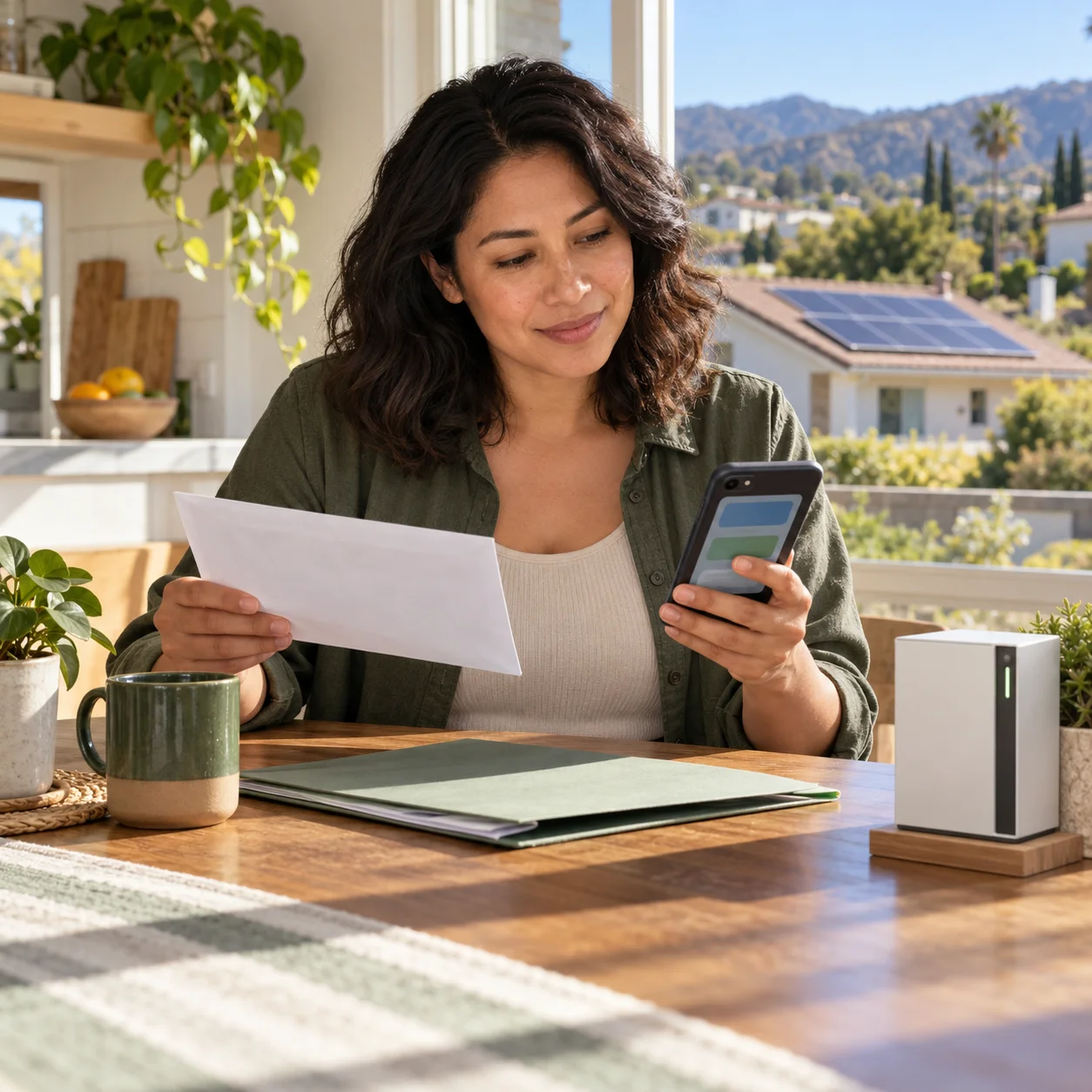
Quick answer: the name on the bill determines where to start
Los Angeles County does not have one countywide solar rebate. Start with the electric utility and any community choice provider shown on the account, then check the exact service address, homeownership and occupancy, income eligibility, equipment requirements, application status and current funding. A nearby household can have a different path even in the same ZIP code.
For an SCE-served, owner-occupied single-family home, screen for DAC-SASH and current SGIP categories. LADWP and Burbank customers must use their municipal-utility pathways. Eligible Clean Power Alliance residential customers can separately check its current battery rebate. Renters and households that cannot install rooftop solar should ask about bill-discount or community-solar enrollment rather than assuming a rooftop program applies.
October 29, 2026 update: Pasadena has its own customer-owned rebates
For Pasadena Water and Power residential electric customers, the current solar page offers $0.60 per watt, or $1 per watt for customers enrolled in its qualifying income-assistance programs. The customer must own the system; leased and PPA systems are excluded. New rooftop systems must be installed on or after January 1, 2026 and meet utility requirements. Apply within 180 days of interconnection, using the program's CEC-AC capacity measurement. This is a PWP-account offer, not a Los Angeles County or LADWP rebate.
PWP's battery offer lists $350 per kWh plus $200 per kWh for qualifying income-assistance or Medical Assistance enrollment. Customer ownership, equipment, contractor and installation requirements apply, with a claim due within 180 days of final permit approval. Battery recipients commit to the first applicable PWP demand-response or virtual-power-plant program for 36 months after launch, with enrollment within 90 days if technically eligible, telemetry sharing and stated clawback conditions. Review those future obligations alongside backup-reserve needs.
A PWP efficiency visit can come before the solar quote
PWP's Home Improvement Program offers residential electric customers a no-cost evaluation and selected measures such as insulation, air and duct sealing, weatherstripping and AC tune-up. Homeowners and renters may qualify; renters need owner authorization. The service-value maximum is $7,500 per home, participation is limited to once every three years at the same address, and an assessment determines which measures are provided. This is an improvement service, not a $7,500 cash grant.
For other accounts, follow the matching utility's pathway. SCE's ratepayer SGIP budgets remain closed to new applicants, while its Residential Solar and Storage Equity budget is exhausted and waitlisted; LADWP also warns of a long SGIP waitlist and limited funds. Neither a county address nor a lottery notice establishes an available solar-and-battery award.
Start with one bill, not a sales pitch
A solar proposal can feel out of reach when the first number you see is a monthly payment or a five-figure project cost. Before deciding that solar is impossible, take out your electric bill. The provider’s name is the first clue to the assistance worth researching.
Los Angeles County includes different electric service territories. Two families living nearby may need completely different programs. The useful question is: which program serves my account, and what would it actually cover?
If you have SCE: check the no-cost solar pathway
DAC-SASH can provide no-cost rooftop solar for qualifying income-qualified homeowners in designated disadvantaged communities. The CPUC listed an application pathway at the article's review date; application status and available funding must be rechecked with GRID Alternatives before a homeowner relies on it.
GRID Alternatives lists ownership and occupancy of a single-family primary residence, a qualifying address, CARE or FERA income limits, and service from PG&E, SCE or SDG&E. For local SCE households, it is a concrete place to start an eligibility inquiry. LADWP and Burbank electricity accounts do not meet that listed utility requirement.
If you have LADWP: understand the waitlist
LADWP’s SGIP pathway offers income-qualified solar and battery assistance. At the article's review date, LADWP's program page warned that the waitlist was long, funds were limited and an incentive was not guaranteed. Check the live program page for the latest status.
Researching the program can still be useful. Just keep an application or lottery notice separate from an actual funding award. Ask what you would owe if the assistance does not arrive before making a financial commitment.
If you have Burbank Water and Power: look at battery help
BWP publishes battery-rebate tiers, including a $530-per-kWh tier described for customers ineligible for a federal tax incentive. That description is not an automatic determination that every new 2026 homeowner qualifies for the higher tier merely because the federal Section 25D homeowner credit ended for systems placed in service after 2025. Ask BWP to confirm the applicable tier, equipment eligibility, eligible net costs and available funding in writing before using any rebate figure in a purchase decision.
BWP requires participating batteries to discharge at least 80% of capacity daily during its 4–7 p.m. peak period and remain installed for ten years, with potential prorated early-removal fees. Its published rules require a complete application within six months of installation, limit rebates to the first 100 kWh and to eligible net cost after other incentives, and warn that funding is limited. These operating and application conditions may not suit every homeowner's backup reserve goals. Read our Burbank guide and confirm current terms with BWP before purchasing.
If Clean Power Alliance appears on the bill: check the battery rebate separately
Clean Power Alliance is a community choice provider for participating communities, while SCE generally continues delivering electricity. CPA's current Sun Storage Rebate materials list a $2,000 base incentive for eligible residential battery systems and up to $3,500 for qualifying customers. The higher amount, equipment rules, reservation timing and available funding must be verified for the specific account.
Do not combine a CPA rebate with another advertised incentive until each administrator confirms that stacking is allowed and identifies which eligible costs remain. Request the full installed price before rebates and a second calculation using only formally reserved or approved assistance.
SCE solar-and-storage help has a separate funding status
DAC-SASH and SCE’s SGIP Residential Solar and Storage Equity budget are different programs. At the article's review date, SCE stated that the RSSE budget was exhausted and applications were waitlisted. Recheck the current budget and application status with SCE before planning around an award. An open application pathway for one program does not establish funding for another.
Rooftop help and electricity-bill discounts solve different problems
CPUC materials describe DAC-GT as a 20% electric-rate discount for eligible income-qualified residential customers in disadvantaged communities served by participating providers. It is not a rooftop installation or ownership program. Ask the account provider whether the exact service address is eligible, whether enrollment is available or automatic, and which bill charges receive the discount.
LADWP's EZ-SAVE program is also a bill-assistance path rather than a rooftop-solar rebate. LADWP says income proof is not required at initial enrollment, although eligibility may be checked later. A household facing immediate bill pressure should compare current utility-assistance programs with a long-term solar contract instead of treating solar financing as emergency bill relief.
A neighbor’s example: same goal, different next steps
Picture two fictional households hoping to lower their electricity costs. One owns an SCE-served home and begins GRID’s eligibility screening. The other has LADWP and reviews its income-qualified assistance pathway. Their next step is to find out what applies to their own property—not to copy the neighbor’s advertised benefit.
Neither household should subtract an unapproved incentive from a loan budget. Request a proposal showing the full price and a separate line for any assistance the administrator has actually confirmed.
Give yourself a useful first step today
Write down your electric utility, whether you own and occupy the property, and what you hope solar or storage would accomplish. Then open the matching program guide below. It explains the status recorded at its review date, questions to ask and official sources where you can verify the latest availability.
For DAC-SASH, use GRID’s official eligibility form or call 866-921-4696. For the utility programs, start with the utility’s own program page. Submit household documents through the administrator’s official application channel.
You do not need to decide on a loan to begin researching eligibility. A clear answer about your program options can make the next conversation with an installer much more useful.
Share a starting point, not a promise
Know a homeowner who has stopped looking because solar seems too expensive? Share this guide and encourage them to check the name on their bill. It may point them toward a relevant application, or help them recognize that a program does not fit.
Home Solar Simplified provides education; the program administrator determines eligibility and funding. Program information reflects the review date shown above, not a live funding or eligibility determination. Confirm the administrator's current rules, application status and available funds before applying or signing.
How to verify solar and battery incentives
- Find the official administrator. Identify the government agency or utility administering the incentive, not just an advertised offer.
- Confirm current eligibility. Verify the program year, qualifying equipment, household rules, funding and application timing.
- Compare costs without the incentive. Evaluate the installed price even if an unapproved incentive is delayed or denied.
For further independent technical context: California Energy Commission — Energy Resources. This is an educational reference, not an installer recommendation.
Frequently asked questions
Is there one Los Angeles County solar rebate?
No. Programs depend on the electric utility, any community choice provider, exact address, property type, ownership and occupancy, household eligibility, equipment and current funding. County residence alone does not establish eligibility.
Can an SCE customer get no-cost rooftop solar through DAC-SASH?
Possibly. GRID Alternatives says applicants must meet every requirement, including SCE, PG&E or SDG&E service; ownership and occupancy of a single-family primary residence; qualifying income; and an eligible disadvantaged-community or other approved location.
Are LADWP customers eligible for DAC-SASH?
Not under GRID Alternatives' listed utility requirement. LADWP customers should check LADWP's own solar, storage and bill-assistance programs and verify current application and waitlist status directly with LADWP.
What battery assistance can Los Angeles County homeowners check?
Depending on the account, possible starting points include SCE or LADWP SGIP pathways, Burbank Water and Power's battery program, and Clean Power Alliance's Sun Storage Rebate. Each has different service-territory, customer, equipment, timing and funding rules.
Can renters receive solar-related assistance?
A renter generally cannot use a homeowner rooftop pathway without property control, but eligible households may have bill-discount or community-solar options. Ask the utility or community choice provider about the exact account and address.
Can a 2026 homeowner subtract a 30% federal solar credit from the project?
No. Current IRS guidance says the Residential Clean Energy Credit is unavailable for property placed in service after December 31, 2025. Evaluate 2026 assistance and financing without an assumed homeowner credit.
Program contacts and verification
Clean Power Alliance — Sun Storage Rebate / Energy Team
Phone: 866-319-4488
Official program website Verify this information at its official sourceCheck eligibility and take the next step
These links open the official program or its application service.
Check no-cost solar eligibility through GRID Alternatives Check CPA battery rebate eligibility Check LADWP eligibility and waitlist Check PWP solar rebate eligibility Read PWP battery rebate and future VPP terms Request a PWP home efficiency evaluationQuestions worth asking
- Which utility is on my electric bill?
- Does my exact address and household meet the program rules?
- Is the program accepting applications, waitlisting or awarding funding?
- What costs would remain if assistance is unavailable?
Related guides
Understand California solar assistance eligibilityCheck LADWP-specific solar and battery assistanceCheck SCE-specific storage program statusDAC-SASH: no-cost solar eligibilityBurbank: battery rebate guideClean Power Alliance battery rebate requirementsDiagnose a high LADWP bill before adding solarUse the Southern California buying checklistSolar planning in Los Angeles County
Electric utility rules, roof conditions and household electricity use vary by address. Explore regional guidance before relying on a statewide solar savings estimate.
Los Angeles County solar education San Fernando Valley: LADWP, panels and batteries Northridge solar planning Van Nuys solar quotes and utility questionsStill researching solar?
Search homeowner guides by topic, electric utility, or location.
Sources and further reading
Updated: October 2026. Confirm changing details with the official sources.
These links identify documents and resources used for this guide. Listing a source does not mean it was independently checked today. Utility rates, incentives, product specifications and program availability may change; confirm the latest version and effective date with the source.
CPUC — Current low-income solar program pathwaysGRID Alternatives — Check DAC-SASH eligibilityGRID Alternatives — Official eligibility formLADWP — SGIP eligibility and waitlist statusBWP — Battery rebate and operating termsSCE — SGIP funding and eligibilityClean Power Alliance — Sun Storage RebateCPUC — DAC-GT bill-discount programLADWP — EZ-SAVE bill assistanceIRS — current Residential Clean Energy Credit rulesPWP — Residential Solar RebatePWP — Residential Battery Storage Rebate termsPWP — Home Improvement ProgramStart with a home energy checkup
Organize your usage, home details and goals before comparing proposals.
Try the home energy checkupReady to compare companies?
Explore provider options when you are ready to request quotes.
Explore provider options