MCE Solar Storage Credit: $10 or $20 Monthly Battery Bill Credit
As of October 25, 2026, eligible MCE customers with paired solar and batteries can apply for a $10 or $20 monthly bill credit by meeting current rate and battery-setting rules.
Published by Home Solar Simplified · Editorial standards
https://homesolarsimplified.org/solar-guides/mce-solar-battery-bill-credit
Published by Home Solar Simplified. Includes 11 linked sources. Documented editorial date: .
A citation or editorial date does not guarantee a tariff, incentive or program remains unchanged today.
Quick answer: this is a monthly operating credit, not an installation rebate
As of October 25, 2026, MCE publishes a $10 monthly Solar Storage Credit for an eligible 7–20 kWh battery and $20 for an eligible battery over 20 kWh. This is a conditional monthly bill credit earned after enrollment and required battery programming. It is not an upfront battery installation rebate and does not guarantee lower total electricity costs.
At 12 qualifying months, the published credit alone would total $120 or $240. Treat those as maximum annual arithmetic examples, not promised savings: eligibility, battery settings, rate charges, solar exports, household use and participation duration still affect the actual bill.
Confirm the account, equipment and rate requirements
MCE's current page says the applicant must be an MCE customer and have solar connected to a home energy-storage battery. It lists qualifying Time-of-Use examples including E-TOU-C, E-TOU-D, EV2 and E-ELEC. Those names describe PG&E delivery rate schedules used with MCE generation service; verify the exact rate code on the actual PG&E bill rather than relying on a sales proposal.
MCE serves specific Bay Area communities, while PG&E continues electricity delivery, meter service and billing. Confirm that the service address is in MCE territory and that the account currently receives MCE generation before relying on the credit.
Program daily discharge and backup reserve deliberately
MCE requires the battery to discharge daily from 4–9 p.m. and sets the normal reserve at no more than 20%. Its current page makes an exception to prepare for or during a power outage. A low reserve may leave less stored energy for an unexpected outage, so compare the rule with essential loads, expected outage duration, medical needs and the battery's usable capacity before enrolling.
Ask MCE how outage preparation is recognized, when the exception starts and ends, whether a manual override affects a credit, and what happens after an internet or equipment outage. Save written confirmation of the outage exception before changing a backup setting that protects critical household loads.
Apply, document approval and inspect the actual bill
Use MCE's current Solar Storage Credit application form. MCE says the credit should begin within two billing cycles after it confirms eligibility and required programming. Submission is not the same as approval, and two billing cycles is not necessarily two calendar months.
Save the submitted form, confirmation, battery screenshots and approval date. Check the actual PG&E/MCE bill for the credit and compare the first credit period with MCE's example. Contact MCE at the current support channel if it is missing rather than assuming the installer or lender will correct it.
Keep the credit separate from NEM and the Solar Billing Plan
MCE says receiving the Solar Storage Credit does not change a customer's NEM status. MCE's June 18, 2026 billing guidance also says adding battery storage to an existing NEM 1.0 or NEM 2.0 system generally does not end NEM eligibility. Significant solar-system changes may be different, so obtain the utility's written determination before altering array size or interconnection.
The newer Solar Billing Plan, or SBP, uses hourly export credit values and includes separate MCE solar credits. The $10 or $20 Solar Storage Credit is another line item; it is not the same as export compensation. Model imports, exports, generation charges and the battery credit separately.
Do not confuse this credit with MCE's older Energy Storage Program
MCE's January 28, 2026 board packet says the Energy Storage Program that provided battery rebates and financing is closed to new customers because funds were allocated. The same packet separately lists the Solar Storage Credit Program, and MCE's live Solar Storage Credit application remains available. The names are similar, but the benefits and intake status are different.
MCE's current credit page says customers who received a battery through the older Energy Storage Program do not need to sign up for the Solar Storage Credit because they receive it automatically. Other homeowners should not interpret the open monthly-credit form as a reopening of the old installation-funding program.
Check SGIP and other bill programs without assuming automatic stacking
MCE's current page says customers expecting an SGIP incentive must switch to a rate schedule compatible with SGIP requirements. SGIP eligibility, budget status, battery sizing and program rules are separate from MCE's monthly credit. Confirm the controlling SGIP requirement with the program administrator before changing rates.
MCE says the Solar Storage Credit can remain alongside other bill-discount programs and identifies MCE Sync as another possible program. That is not proof that every battery, utility or demand-response incentive stacks. Ask each program administrator to confirm compatibility in writing and identify which party can control the battery.
Correct any outdated federal tax-credit assumption
Current IRS guidance says the homeowner Residential Clean Energy Credit is unavailable for property placed in service after December 31, 2025. A 2026 homeowner battery proposal should not assume a new Section 25D credit. A valid unused credit from an eligible earlier year may have a historical carryforward, which is a different question for a qualified tax professional.
Keep the MCE monthly bill credit, any SGIP incentive and any historical federal tax item as separate line items. A program credit does not reduce the contract price unless the written contract and lender disclosures actually do so.
Compare the full payment schedule and operating tradeoffs
Do not subtract $120 or $240 from an installation quote as though it were cash at closing. Request the itemized cash price and the full loan, lease or PPA payment schedule with no Solar Storage Credit, then show earned monthly credits separately. Ask who bears the cost if the rate is incompatible, enrollment is denied, the equipment cannot maintain the settings or the program changes.
Compare a full year of projected imports, exports and rate charges under the proposed schedule. Include potential battery cycling, energy losses, the opportunity cost of exported solar energy and the value of backup reserve. A credit can improve one line on the bill while required operation changes another, so judge the offer on total household cost and resilience rather than the credit alone.
Keep the operating credit visible during later account changes
When changing the electric rate, replacing a battery or transferring service, ask MCE whether the existing credit record needs an update. Save the old and new account or device identifiers with the approval email so support can trace the change. Then inspect the relevant billing periods rather than assuming the credit transfers automatically. If it disappears, distinguish an administrative mismatch from an intentional eligibility decision before changing battery settings. Provide the dates and equipment details and request a written explanation. A small monthly credit is easier to manage when its approval, required operation and appearance on the statement can be checked against the same concise record.
Illustrated explanation
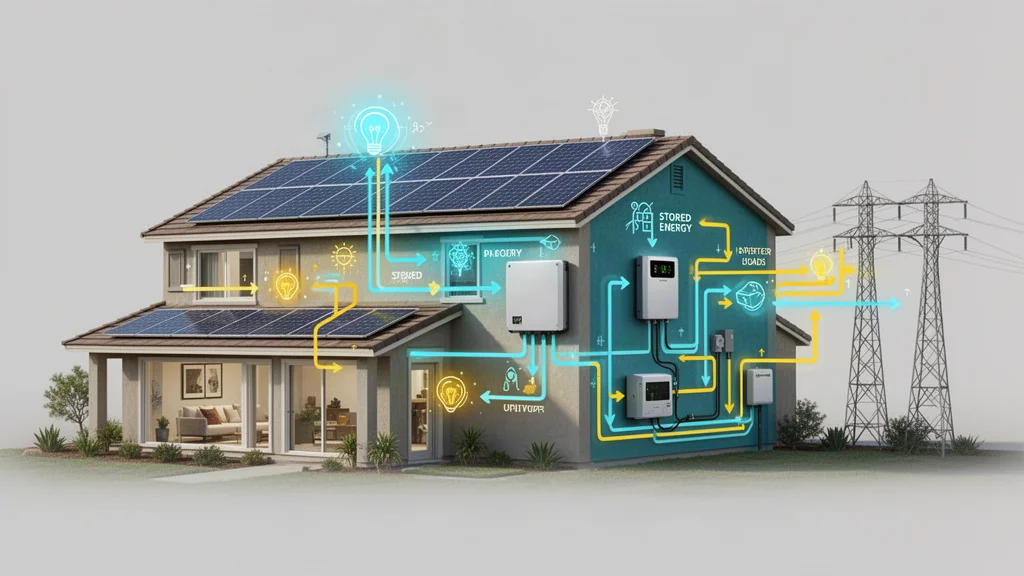
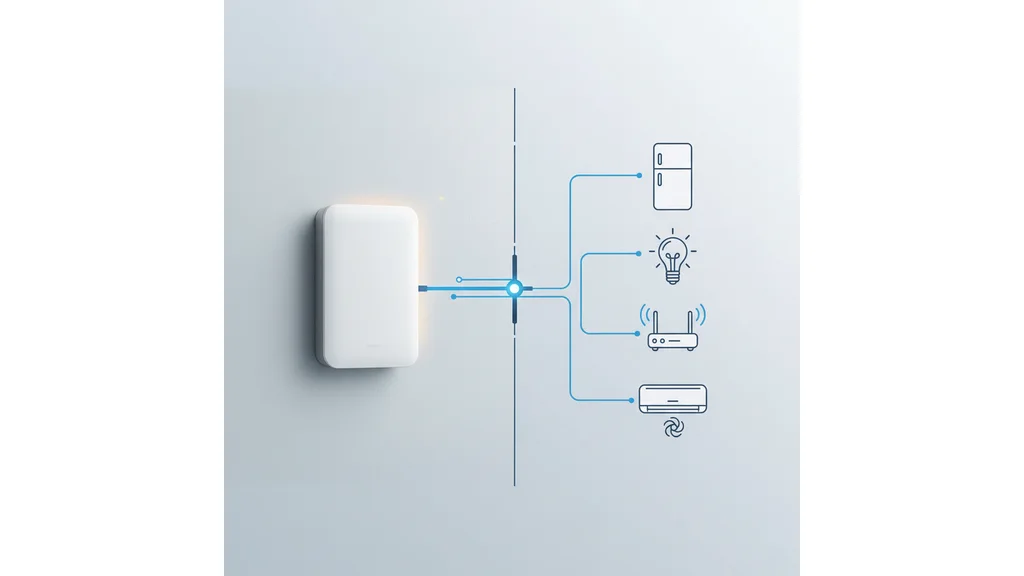
How to plan home battery storage
- List essential loads. Write down the appliances and circuits needed during an outage, including their running watts and any starting surge.
- Compare power and energy. Check continuous output in kW separately from usable stored energy in kWh. Estimate runtime using realistic consumption and conversion losses.
- Verify the operating mode. Ask whether the system can isolate from the grid, recharge from solar during an outage, and comply with the applicable utility interconnection requirements.
For further independent technical context: California Energy Commission — Energy Resources. This is an educational reference, not an installer recommendation.
Frequently asked questions
How much is MCE's Solar Storage Credit?
As of October 25, 2026, MCE publishes $10 per month for an eligible 7–20 kWh battery and $20 per month for an eligible battery over 20 kWh, subject to current enrollment and operating rules.
Is the MCE credit an upfront battery rebate?
No. It is a monthly bill credit after eligibility and programming confirmation, not cash toward installation and not guaranteed total savings.
What battery settings does MCE require?
MCE currently requires daily discharge from 4–9 p.m. and a reserve no higher than 20%, except when preparing for or during a power outage.
Which rates does MCE list as eligible examples?
The current page lists E-TOU-C, E-TOU-D, EV2 and E-ELEC. Confirm the exact code on the PG&E bill and any SGIP-compatible-rate requirement.
How soon should the credit appear?
MCE says within two billing cycles after it confirms eligibility and required programming. Save the approval and inspect the actual bill.
Does enrolling change NEM status?
MCE says the credit does not itself change NEM status. Its 2026 guidance says adding a battery generally does not end legacy NEM, but significant solar-system changes may be different.
Is MCE's older Energy Storage Program still open?
No. MCE's January 2026 board packet says that installation-funding program is closed to new customers. The separate Solar Storage Credit application remains available.
Can a 2026 homeowner claim a new federal Residential Clean Energy Credit?
Current IRS guidance says no for property placed in service after December 31, 2025. A valid historical carryforward from an earlier eligible year is separate.
Program contacts and verification
MCE — Solar Storage Credit
Phone: 888-632-3674
Email: info@mceCleanEnergy.org
Official program website Verify this information at its official sourceCheck eligibility and take the next step
These links open the official program or its application service.
Open MCE's Solar Storage Credit application Review the current credit rules and programming instructions Confirm that the service address is in MCE territory Use MCE's guide to locate charges and credits on the billQuestions worth asking
- Is my address and generation account served by MCE?
- Is my solar connected battery in the $10 or $20 capacity tier?
- Which exact Time-of-Use rate appears on my actual bill?
- Can my battery discharge daily from 4–9 p.m.?
- Would a 20% reserve cover my backup priorities?
- Am I applying for the Solar Storage Credit rather than the closed Energy Storage Program?
- Does SGIP or another program require a different rate or battery control?
- What does the full payment schedule show with no monthly credit?
Related guides
California rebate and assistance overviewUnderstand batteries under California net billingCompare a separate battery purchase-rebate pathwayCompare battery participation rewards and controlsSize battery capacity, power and reserveCompare battery fit without assuming a creditCompare financing with and without earned creditsReview the contract before signingCheck battery design and contract detailsSolar planning in Los Angeles County
Electric utility rules, roof conditions and household electricity use vary by address. Explore regional guidance before relying on a statewide solar savings estimate.
Los Angeles County solar education San Fernando Valley: LADWP, panels and batteries Northridge solar planning Van Nuys solar quotes and utility questions Sylmar roof and battery backup planningStill researching solar?
Search homeowner guides by topic, electric utility, or location.
Sources and further reading
Updated: October 2026. Confirm changing details with the official sources.
These links identify documents and resources used for this guide. Listing a source does not mean it was independently checked today. Utility rates, incentives, product specifications and program availability may change; confirm the latest version and effective date with the source.
MCE — current Solar Storage Credit rules and FAQsMCE — Solar Storage Credit application formMCE — January 28, 2026 budget workshop packetMCE — June 18, 2026 solar billing changesMCE — current Solar Billing PlanMCE — current Net Energy Metering overviewMCE — current service areaMCE — understand the combined MCE and PG&E billPG&E — current EV2-A and E-ELEC rate comparisonCPUC — Self-Generation Incentive ProgramIRS — Residential Clean Energy Credit current cutoffStart with a home energy checkup
Organize your usage, home details and goals before comparing proposals.
Try the home energy checkupReady to compare companies?
Explore provider options when you are ready to request quotes.
Explore provider options