Solar Batteries Under California NEM 3.0: Why Storage Changes the Math
How batteries can shift rooftop solar into higher-value evening hours under California's current net-billing structure.
Program information checked October 5, 2026. Confirm current availability with the administrator.
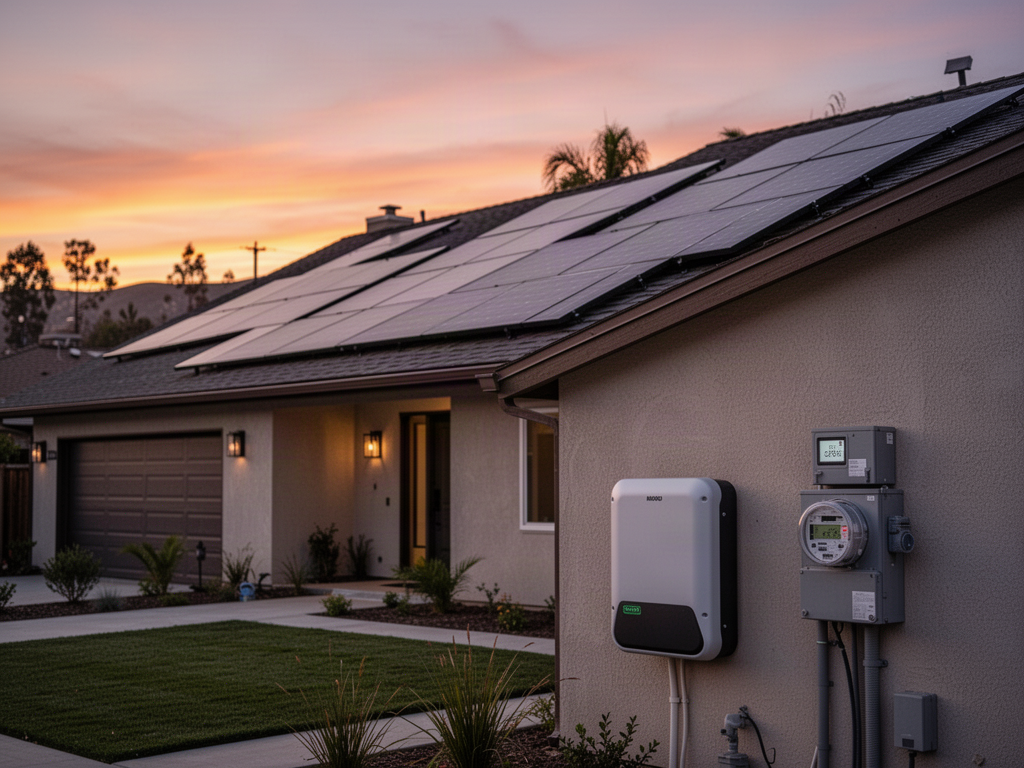
Export timing matters more than it used to
Under California's current net-billing structure for many investor-owned utility customers, exported solar electricity is not generally credited at the same retail rate homeowners pay for electricity consumed from the grid.
That increases the importance of using more solar on-site or storing midday production for later use.
A battery can move solar into the evening
Instead of exporting every surplus kWh at midday, a battery can charge from rooftop solar and discharge later when the home is consuming power after sunset.
Whether that improves project economics depends on utility tariff, battery efficiency, system cost, load shape and control strategy.
Backup value is separate from bill savings
Some homeowners buy batteries mainly for resilience. Others buy them primarily for time-of-use management. Those are different value propositions and should be evaluated separately.
Do not let a proposal blend backup value and bill savings into one opaque payback claim.
Battery size should match the load profile
A battery that is too small may fill and empty quickly. A very large battery may add cost without enough daily cycling to justify it for bill management.
Use interval usage and modeled solar production to estimate how many kWh can realistically be shifted most days.
Verify the actual utility assumptions
Ask which tariff, export values and time-of-use periods are used in the savings model. Utility rules and rate structures can change, so the proposal should identify its assumptions clearly.
Questions worth asking
- Which utility tariff is modeled?
- How many kWh will the battery shift on a typical day?
- What portion of the value is backup versus bill management?
- How sensitive is the payback to changing export values?
Sources and further reading
California Public Utilities Commission — Solar Consumer Protection GuideU.S. Department of Energy — Homeowner's Guide to Going SolarSolarEdge — Home Battery 400VExplore more for your home
Home Solar Simplified
Explore solar education, battery planning and home energy tools to prepare for your next decision.
Explore Home Solar SimplifiedConnectPoint ISP
Visit ConnectPoint ISP to explore home internet options and ask about service availability at your address.
Visit ConnectPoint ISP