SMUD Battery Incentives in 2026: Current Payment, Deadlines and Three-Year Terms
As of October 25, 2026, SMUD's battery enrollment payment is conditional: verify the tier, 90-day window, equipment, three-year term and dispatch rules before counting it.
Published by Home Solar Simplified · Editorial standards
https://homesolarsimplified.org/solar-guides/sacramento-smud-battery-incentives
Published by Home Solar Simplified. Includes 9 linked sources. Documented editorial date: .
A citation or editorial date does not guarantee a tariff, incentive or program remains unchanged today.
Quick answer: verify the payment tier and both deadlines
As of October 25, 2026, SMUD's current homeowner page lists $300 per eligible kWh, up to $6,000 per household, for qualifying interconnection applications submitted beginning September 23, 2026. The earlier $500-per-eligible-kWh tier, capped at $10,000, requires an interconnection application submitted by September 22 and enrollment by December 31, 2026. Both tiers require enrollment within 90 days of permission to operate. Use the current homeowner page for today's advertised amount and the dated participation agreement for obligations; approval, enrollment and payment remain conditional.
Why nameplate capacity is not the payment
SMUD's published calculation applies a 20% reserve adjustment, not the payment rate automatically to every nameplate kWh. The current equipment table gives the Enphase IQ Battery 10C as an example: 10 kWh × 80% × $300 equals a $2,400 listed payment under the newer tier. Confirm the exact model, eligible capacity, submission-date tier and household cap with SMUD; this example is not an award promise.
Check the account, rate and equipment before applying
The homeowner page requires a qualifying residential battery, enrollment on SMUD's Solar and Storage Rate, an account in good standing and authority over the equipment and electric account. MED Rate customers and individual rental units are excluded. Customers with battery equipment fully covered by SMUD may participate but do not receive the one-time enrollment payment. Verify the current eligible-equipment list before signing a purchase contract.
SMUD says a new solar-plus-storage system or a battery-only project has an interconnection fee, while adding storage to an existing solar system does not. Obtain SMUD's written interconnection classification, permission-to-operate date and enrollment confirmation rather than relying on an installer's estimate.
Read the three-year commitment and exit cost
The April 3, 2026 My Energy Optimizer Partner+ agreement establishes an initial three-year term and automatic three-year renewals. Leaving during the initial term can trigger a prorated repayment of the enrollment payment, invoiced with payment due within 30 days. Ask how a sale, move, equipment replacement, account-status change or enrollment in a conflicting program would affect continued participation and repayment.
The agreement PDF still contains an older payment formula. Treat SMUD's current homeowner page as the current advertised-price source, and treat the agreement as the source for contract duties. Save both dated documents with SMUD's written tier confirmation.
Understand remote dispatch and the backup reserve
Participation gives SMUD and its service provider remote access to dispatch the battery during demand-response events. The agreement permits events lasting up to four hours and says program operation may override some customer modes while preserving specified backup capability. Broadband connectivity is required. SMUD's homeowner page says the program leaves a 20% reserve after events and that full battery power remains accessible during an outage.
The agreement warns participation may increase the utility bill because the battery may need to recharge after an event. Compare that operating effect with the payment, your time-of-use plan, backup priorities and battery warranty; do not treat dispatch as cost-free.
Separate the one-time payment from recurring rewards
At this review, recurring quarterly incentives apply only to Tesla batteries: up to $110 for one enrolled battery, $220 for two or $330 for three or more. Those payments are separate from the one-time enrollment payment, may be prorated or changed under the agreement, and may be taxable. Other listed battery brands currently receive the one-time enrollment payment without the same quarterly reward.
Price and finance the project without assumed money
Request the full installed cash price, financed amount, APR, payment schedule and any dealer fee before subtracting a conditional incentive. An illustrative $15,000 project with a possible $2,400 payment is not automatically a $12,600 loan: it does not mean a lender automatically finances the lower amount. Document who receives the payment and whether applying it later changes principal, term or monthly payments. Keep the project affordable if interconnection, enrollment, funding or payment is delayed or denied.
Do not subtract a federal homeowner tax credit from a 2026 project. IRS guidance says the Residential Clean Energy Credit is unavailable for property placed in service after December 31, 2025. Ask a qualified tax professional about your facts and do not let a proposal relabel a conditional SMUD payment as a federal credit.
Build a verification file before enrollment
Keep the SMUD bill, exact model number, equipment-list screenshot, interconnection submission, permission-to-operate notice, enrollment confirmation, dated homeowner page and signed agreement. Ask SMUD in writing to confirm the tier, eligible kWh, payment recipient, 90-day deadline, reserve setting, dispatch access, early-exit repayment and treatment after a move. Keep the contractor's itemized cash and financed proposals beside those records.
Compare remote participation with the household's own operating plan
Ask the installer to show two versions of expected battery behavior: ordinary household bill management without program participation and operation under the proposed participation rules. Identify which charging and discharging decisions change and how much energy is expected to remain for an unexpected outage. Use the same household load, weather and equipment assumptions in both versions. Otherwise the comparison can attribute unrelated differences to the incentive.
Discuss circumstances the simulation does not capture well, such as an unplanned late-evening medical need, a long internet outage or a week when the home is unoccupied. Ask the program and installer which settings the household can change and how to obtain help if operation differs from the agreement. Keep the program benefit separate from any claim that the battery will always preserve a chosen runtime.
Prepare for ownership or equipment changes during participation
Before enrolling, ask how a home sale, equipment replacement, account-name change or switch of internet provider should be reported. Keep the agreement and enrollment identifiers with the property's solar documents so a future owner or service technician can find them. A warranty replacement can leave the physical installation functioning while the program still recognizes the old device identifier.
After a replacement, request confirmation that the new battery is connected, its settings are correct and the program record has been updated. Check the next relevant statement or reward notice. This is a practical administrative check rather than a reason to buy additional equipment; it helps ensure that the installation and the participation record continue to describe the same system.
Illustrated explanation
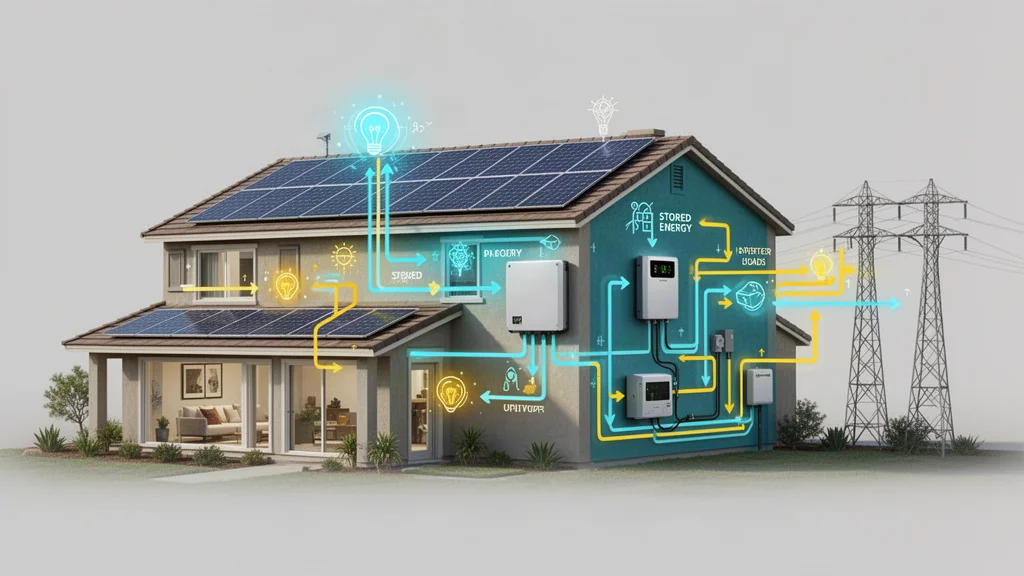
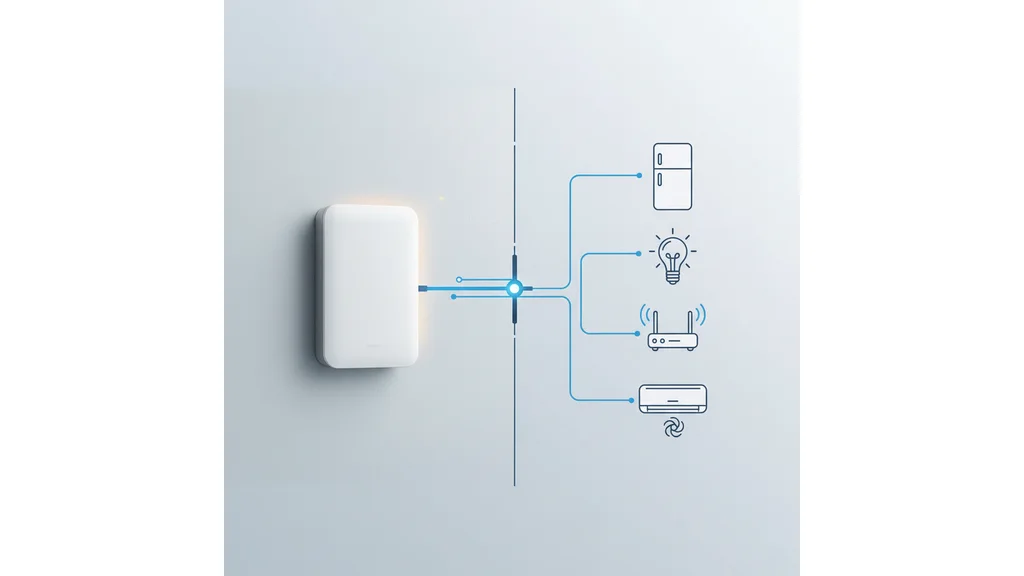
How to plan home battery storage
- List essential loads. Write down the appliances and circuits needed during an outage, including their running watts and any starting surge.
- Compare power and energy. Check continuous output in kW separately from usable stored energy in kWh. Estimate runtime using realistic consumption and conversion losses.
- Verify the operating mode. Ask whether the system can isolate from the grid, recharge from solar during an outage, and comply with the applicable utility interconnection requirements.
For further independent technical context: California Energy Commission — Energy Resources. This is an educational reference, not an installer recommendation.
Frequently asked questions
What is the current SMUD battery enrollment payment?
As of October 25, 2026, SMUD lists $300 per eligible kWh, capped at $6,000 per household, for qualifying interconnection applications submitted beginning September 23, 2026. Confirm the tier and eligible model directly with SMUD.
Can an older project still receive the higher SMUD tier?
SMUD says the earlier $500-per-eligible-kWh tier requires an interconnection application submitted by September 22 and enrollment by December 31, 2026. Enrollment must also occur within 90 days of permission to operate.
Why is the payment lower than battery nameplate kWh times the rate?
SMUD's published examples retain a 20% reserve, so the payment uses eligible capacity rather than automatically using every nameplate kWh. Confirm the exact listed model and calculation with SMUD.
Who is excluded from the enrollment payment?
SMUD excludes MED Rate customers and individual rental units. Customers whose equipment is fully covered by SMUD may participate but do not receive the one-time enrollment payment.
How long is the SMUD Partner+ commitment?
The April 3, 2026 agreement provides an initial three-year term with automatic three-year renewals. Leaving during the initial term can require prorated repayment, so review move and early-exit terms before enrolling.
Can SMUD remotely discharge the battery?
Yes. The agreement grants remote access for demand-response dispatch, with events lasting up to four hours. SMUD says a 20% reserve remains after events and full battery power is accessible during an outage.
Which batteries receive quarterly rewards?
At this review, only Tesla batteries receive recurring quarterly incentives: up to $110 for one battery, $220 for two or $330 for three or more. These are separate from the one-time enrollment payment.
Should a 2026 proposal include the federal homeowner clean-energy credit?
No. Current IRS guidance says the Residential Clean Energy Credit is unavailable for property placed in service after December 31, 2025. The SMUD payment is a separate conditional utility-program payment.
Program contacts and verification
SMUD — My Energy Optimizer Partner+
Email: SaveEnergy@smud.org
Official program website Verify this information at its official sourceCheck eligibility and take the next step
These links open the official program or its application service.
Check the current SMUD battery offer Read the Partner+ participation agreementQuestions worth asking
- Am I a SMUD customer, rather than another Sacramento-area provider?
- Which incentive tier do my dates support?
- What is the payment for my exact battery model?
- When is my 90-day enrollment deadline?
- What reserve remains available for backup?
- What would I repay if I leave during the first three years?
- Does SMUD or its service provider remotely dispatch the battery?
- Is my full installed price affordable if the payment never arrives?
Related guides
Do I need a home battery?Size a battery from loads and runtimeEstimate how many batteries you needPlan whole-home backupKnow what battery installation involvesCompare battery and solar financingCheck the contract before signingCompare home batteries by fitReview a battery quote before signingStill researching solar?
Search homeowner guides by topic, electric utility, or location.
Sources and further reading
Updated: October 2026. Confirm changing details with the official sources.
These links identify documents and resources used for this guide. Listing a source does not mean it was independently checked today. Utility rates, incentives, product specifications and program availability may change; confirm the latest version and effective date with the source.
SMUD — Battery storage for homeownersSMUD — My Energy Optimizer Partner+ terms and conditions (April 3, 2026)SMUD — Solar for your homeSMUD — Solar and Storage Rate compensation updateSMUD — Residential ratesCalifornia Energy Commission — Solar equipment listsCSLB — Solar energy system consumer informationU.S. Department of Energy — Solar-plus-storage 101IRS — Residential Clean Energy CreditStart with a home energy checkup
Organize your usage, home details and goals before comparing proposals.
Try the home energy checkupReady to compare companies?
Explore provider options when you are ready to request quotes.
Explore provider options