Will Solar Panels Work During a Power Outage?
As of October 26, 2026, standard grid-tied solar shuts down during a utility outage. Backup requires compatible equipment, intentional isolation, selected loads and a tested operating plan.
Published by Home Solar Simplified · Editorial standards
https://homesolarsimplified.org/solar-guides/will-solar-work-during-power-outage
Published by Home Solar Simplified. Includes 12 linked sources. Documented editorial date: .
A citation or editorial date does not guarantee a tariff, incentive or program remains unchanged today.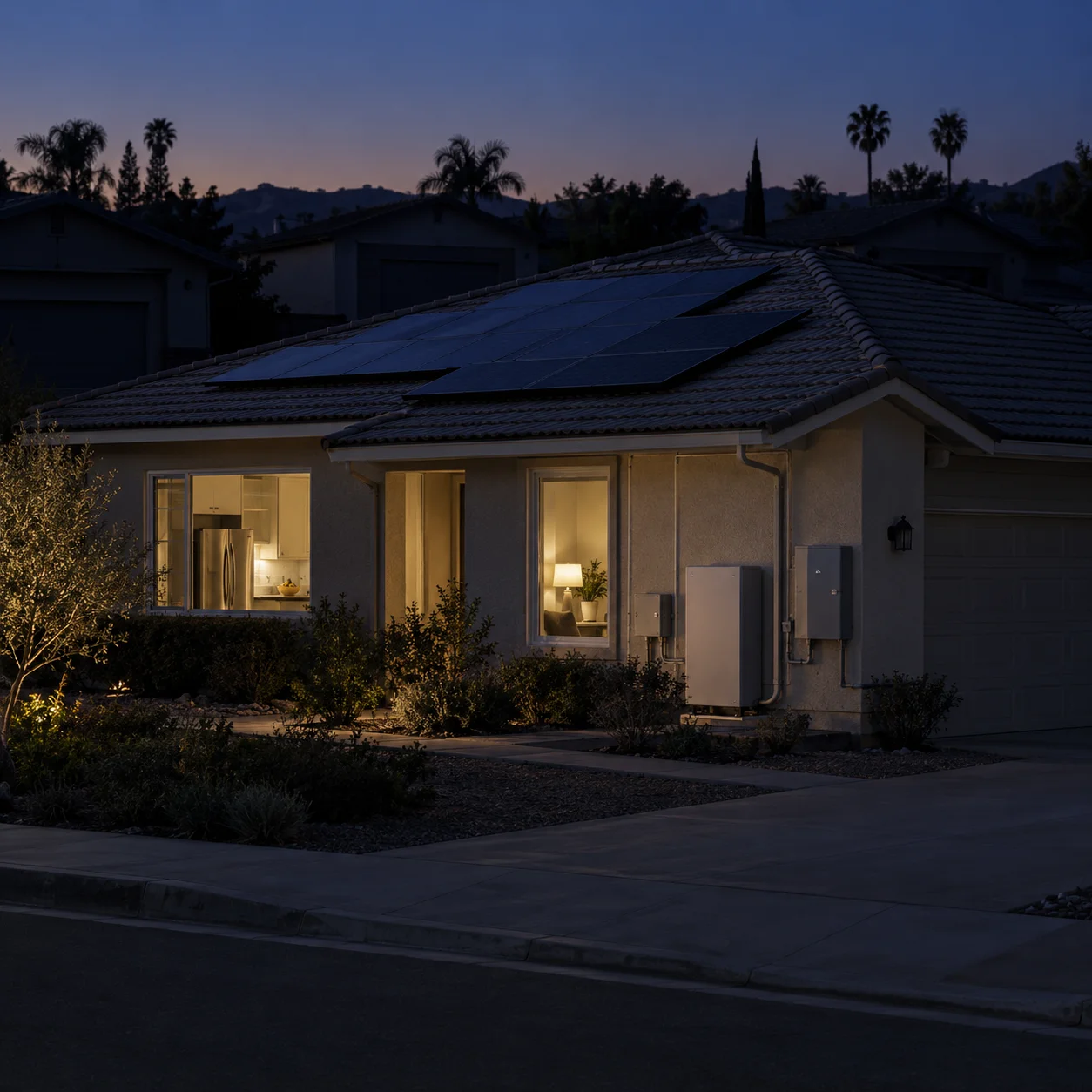
Quick answer: standard grid-tied solar shuts down unless the system is designed for backup
During a utility outage, standard grid-tied solar shuts down for safety. Rooftop panels alone do not keep a home energized when the grid is unavailable, even when the sun is shining.
Outage power requires a complete, compatible design that can separate from the grid and control local voltage and frequency. Verify the inverter, storage, transfer equipment, backed-up circuits, usable energy, power limits and islanded solar-recharge behavior in writing.
Why ordinary grid-tied solar turns off
A normal grid-connected inverter follows the utility grid. When grid voltage disappears or moves outside required limits, anti-islanding protection stops the solar system from energizing local utility lines.
That shutdown protects utility crews, neighbors and equipment from an uncontrolled electrical island. It is not evidence that the panels are broken, and it should never be bypassed with improvised wiring or a household plug.
Backup is a complete system, not a battery box
A backup-capable proposal may require a compatible inverter, battery, gateway or transfer device, controls, protection equipment, metering and either a backed-up-loads panel or approved whole-home configuration. The exact components depend on the equipment and electrical design.
A battery sold for bill management is not automatically wired for outage service. Require a one-line diagram showing the grid connection, isolation point, inverter, storage, main panel, any backup panel and every controlled or excluded load.
What an intentional island does
When the grid fails, approved transfer or isolation equipment disconnects the backup system from utility lines. A compatible inverter then forms a stable local source for the permitted circuits; this operating state is often called an intentional island.
When utility service returns, the system must follow its approved reconnection sequence. Ask whether transfer is automatic, whether any loads briefly lose power, what conditions delay reconnection and whether a homeowner action is ever required.
Selected-circuit backup and whole-home labels are different
Selected-circuit backup supplies only the loads wired to a backup panel or enabled by approved controls. Refrigeration, communications, lighting and a few receptacles are common planning priorities, but the actual circuit list controls.
A whole-home marketing label does not promise that every appliance can run simultaneously. Air conditioning, well or pool pumps, electric cooking, water heating and vehicle charging can exceed the system's available power unless the design includes enough output and dependable load management.
Check usable kWh, continuous kW and starting surge
Usable kWh describes how much stored energy is available. Continuous kW describes how much power the system can sustain at once. Starting surge or motor-start capability describes whether it can start equipment whose brief demand is higher than its normal running power.
All three constraints must work at the proposed reserve setting and installed configuration. A battery can have enough energy for a long runtime but still be unable to start an air conditioner, or enough power to start it but too little usable energy to run it for long.
Build a load-by-load runtime worksheet
List each backed-up load, its measured or nameplate watts, expected duty cycle and hours of use. Add simultaneous watts to test power limits, then estimate energy by multiplying average kW by hours and allowing for conversion losses and the minimum reserve.
For a clearly labeled illustration, an average 0.8 kW of selected loads for 10 hours uses about 8 kWh before losses and reserve. This is not a runtime promise: refrigeration cycling, communications equipment, weather, battery condition and homeowner behavior can change the result.
Solar recharge during an outage requires exact compatibility
Some correctly configured solar-plus-storage systems can accept solar recharge during an outage while islanded. Others cannot, and some can curtail solar when loads are low or the battery is full. Do not assume grid-connected solar will automatically restart behind any battery.
Ask for the exact operating sequence from daylight through sunset, overnight and the next morning. Confirm whether the system can restart after reaching its low-battery limit, what minimum energy it reserves, and which conditions prevent solar recharge during an outage.
Plan for a multiday outage and low-solar conditions
A one-night runtime estimate does not answer a multiday outage. Model at least one lower-solar case, decide which loads will be shed first and identify how the household will respond if smoke, shade or cloudy weather limits recharge.
If a generator, electric vehicle or portable power station is part of the plan, require a separately approved connection and operating procedure. Never connect a generator through a wall outlet, operate combustion equipment indoors or assume two backup sources can be combined without listed compatible controls.
Check SCE or LADWP rules for the actual property
SCE states that a grid-tied solar system shuts down during an outage unless it includes battery storage. Its backup-power and storage pages describe separate preparedness options, but availability, incentives and equipment eligibility must be checked at the time of application.
LADWP publishes separate electrical-service requirements for battery backup and transfer equipment, including safeguards against parallel operation during an outage. Confirm the serving utility, current interconnection requirements, permits and inspection path before work begins.
Keep medical-device and emergency planning independent
A residential solar-battery system should not be the only emergency plan for a person who depends on an electric medical device. Ready.gov advises households to make a plan with a doctor for device power, medication storage and safety during an outage.
Record utility medical-baseline or critical-care contacts where applicable, register for outage alerts, keep accessible charging or evacuation alternatives, and test the backup plan before fire weather or another forecast event. Product marketing is not a clinical reliability guarantee.
Require a commissioning test and complete handoff
Before sign-off, require a commissioning test that simulates loss of grid power and demonstrates transfer, supported circuits, large-load controls, solar recharge when conditions allow, low-battery behavior, alarms and reconnection. Do not open energized equipment or perform unsafe testing yourself.
Keep the approved one-line diagram, permit and inspection records, utility approval, exact model and serial numbers, backed-up-circuit map, reserve settings, monitoring access, shutdown instructions, warranties and service contacts. Record who is responsible for diagnosis, labor and replacement equipment.
Bottom line: contract for a tested outage result
The contract should name the exact equipment, backup configuration, supported loads, included electrical work, permits, commissioning and warranty responsibility. CSLB advises homeowners to put promised equipment, costs and performance commitments in writing.
Judge the design by a demonstrated operating plan—not by panel count, battery count or a whole-home label. The safe question is: when the grid fails, which circuits will run, at what power, for how long, with what recharge path and what fallback plan?
How to assess a rooftop solar design
- Review the roof. Document roof condition, remaining service life, usable space, orientation, shade and any planned repairs before committing to a layout.
- Compare power with energy. System capacity is rated in kW; annual generation is estimated in kWh. Request the assumptions for weather, shade, orientation and system losses.
- Confirm installation responsibilities. Ask who prepares plans, obtains permits, schedules inspections, handles utility interconnection and provides warranties for roof penetrations and equipment.
For further independent technical context: U.S. Department of Energy — Homeowner's Guide to Going Solar. This is an educational reference, not an installer recommendation.
Frequently asked questions
Will solar panels work during a power outage?
Standard grid-tied solar shuts down when the utility grid fails. Outage power requires a compatible system that safely isolates from the grid, forms a local electrical source and serves approved loads.
Why do grid-tied solar panels shut down when the grid fails?
Anti-islanding protection stops the inverter from energizing utility lines without a controlled grid reference. This protects workers, neighbors and equipment and must not be bypassed.
Does adding a battery automatically provide backup power?
No. Backup depends on the installed inverter, battery, transfer or isolation equipment, controls, wiring, permits and commissioning. Some batteries are installed only for bill management.
What appliances can a home battery run during an outage?
Only loads included in the approved backup design and within usable energy, continuous power and starting-surge limits. A whole-home label does not mean every large appliance can operate at once.
Can solar panels recharge a battery during an outage?
Some compatible, correctly configured solar-plus-storage systems can recharge while islanded; others cannot. Confirm the exact models, operating sequence, reserve, low-battery restart and curtailment behavior in writing.
How long will a solar battery last in a power outage?
Runtime depends on usable kWh, average load, reserve settings, conversion losses, battery condition and solar recharge. Build a load-by-load worksheet and model low-solar as well as typical conditions.
What should a solar backup contract and commissioning test include?
It should identify exact equipment, supported circuits, electrical work, permits, utility steps, load controls, operating limits, warranty responsibility and a witnessed outage-mode test with handoff records.
How should a household with an electric medical device prepare for an outage?
Make an independent plan with the treating clinician, utility and emergency resources. Maintain alternative power or evacuation options, medication-storage guidance, outage alerts and a practiced fallback; do not rely only on a sales claim.
Questions worth asking
- Will solar panels work during a power outage?
- Why do grid-tied solar panels shut down when the grid fails?
- Does adding a battery automatically provide backup power?
- What appliances can a home battery run during an outage?
- Can solar panels recharge a battery during an outage?
- How long will a solar battery last in a power outage?
- What should a solar backup contract and commissioning test include?
- How should a household with an electric medical device prepare for an outage?
Related guides
Decide whether a battery serves a real goalSize storage from backup loads and runtimeBuild a Southern California outage planUnderstand whole-home backup limitsPlan permits, wiring and commissioningCheck energy, power and configuration limitsCompare battery systems using normalized criteriaFollow the solar energy path and controlsReview backup promises before signingStill researching solar?
Search homeowner guides by topic, electric utility, or location.
Sources and further reading
Updated: October 2026. Confirm changing details with the official sources.
These links identify documents and resources used for this guide. Listing a source does not mean it was independently checked today. Utility rates, incentives, product specifications and program availability may change; confirm the latest version and effective date with the source.
U.S. Department of Energy — Solar and Resilience BasicsU.S. Department of Energy — Homeowner's Guide to SolarU.S. Department of Energy — The Road to Resilience with Rooftop SolarU.S. Department of Energy — Solar Energy and Storage BasicsSouthern California Edison — Solar Technology FAQsSouthern California Edison — Backup Power SolutionsCalifornia Public Utilities Commission — Participating in SGIPCalifornia Public Utilities Commission — Storage Safety Best PracticesLos Angeles Department of Water and Power — Electric Service Requirements, Section 8Los Angeles Department of Water and Power — Backup Generator and Transfer Switch RequestCalifornia Contractors State License Board — Solar SmartReady.gov — Power Outage PreparednessStart with a home energy checkup
Organize your usage, home details and goals before comparing proposals.
Try the home energy checkupReady to compare companies?
Explore provider options when you are ready to request quotes.
Explore provider options